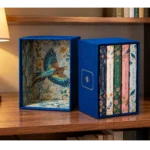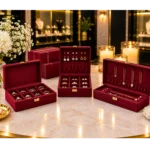
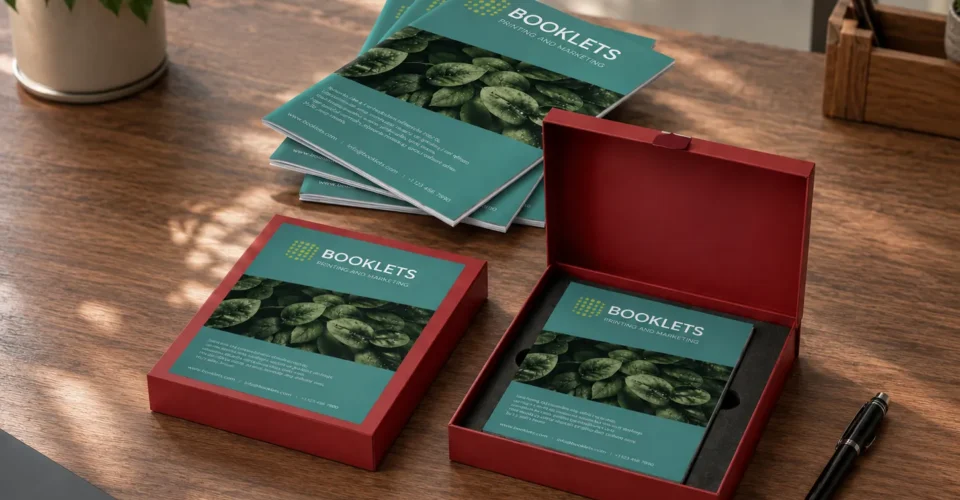
Imagine you walk into a cosmetic brand and see a perfume box that opens like a book. Premium inserts inside, silk lining, and heart-touching visual appeal; would you like to enjoy this luxury again? If yes, customers, whether they come to buy cosmetics, bakery, electronics, apparel, or jewelry boxes, want to feel special. Luxury booklet boxes are so effective at giving that feeling to every customer.
It’s not just the box that appeals; printing also comes as a priority when it’s time to get benefits from well-designed packaging. Prints have the power to engage customers for longer. A box structure that explicitly supports products would draw in customers to a brand that eventually converts and boosts sales.
Plain vs printed packaging – the argument is not new. In this blog post, we will introduce you to some powerful printing techniques for booklet boxes. See what these options are and how they work!
Why Printing Has Become Such an Important Part of Packaging
Currently, we rarely see packaging without prints. Even an elegant Kraft soap box also has a printed logo or paper wrap around each bar.
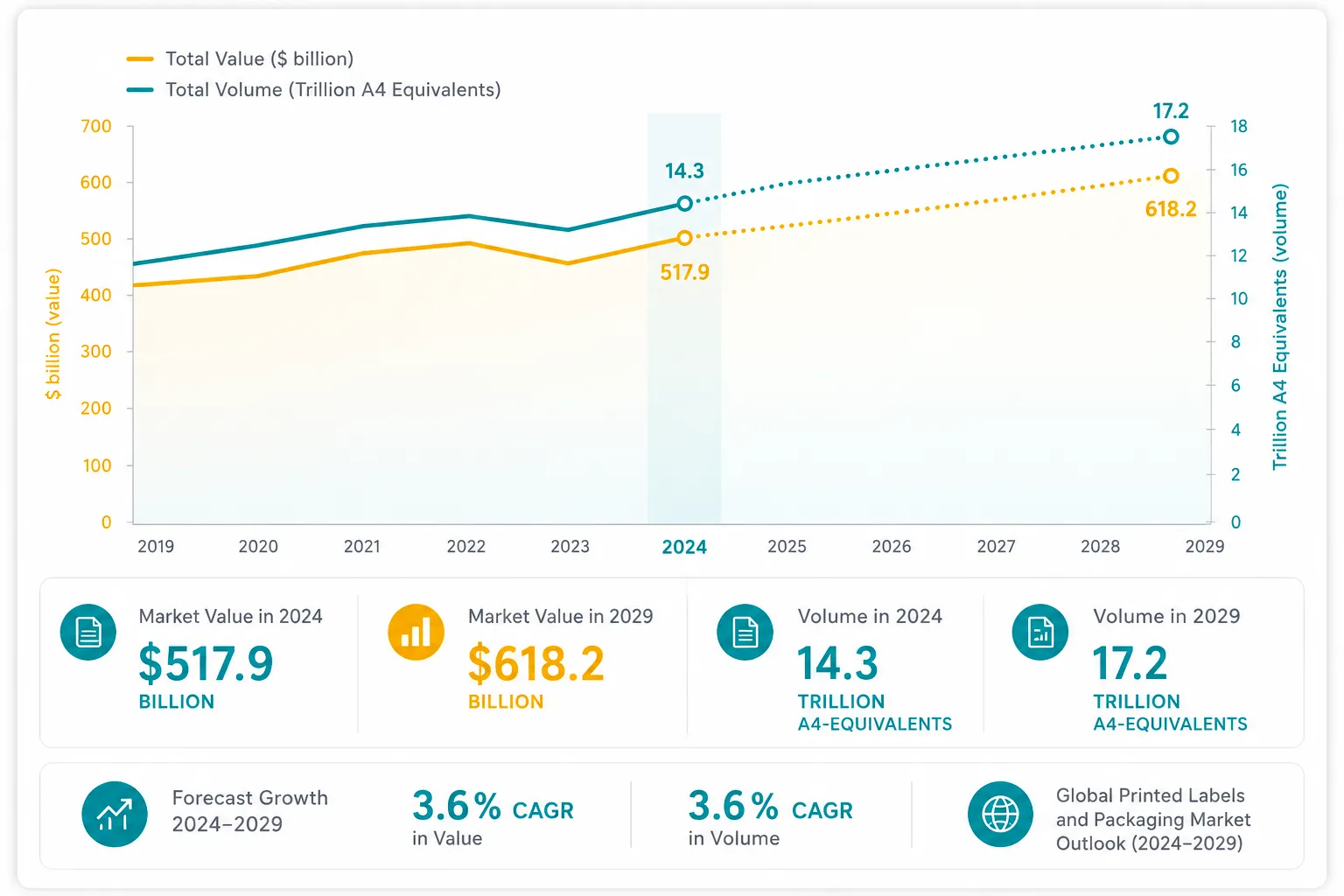
According to Smithers’ latest industry research, the global printed labels and packaging market was valued at $517.9 billion in 2024, with approximately 14.3 trillion A4-equivalent prints produced. The market is forecast to reach $618.2 billion by 2029, representing a 3.6% CAGR in value and volume.
Source: https://www.smithers.com/resources/2025/january/packaging-and-labels-to-power-future-expansion-in
The report’s insights are a strategic move that even startups can take to make millions starting this year. No, it’s not just a rough estimate; rather, in five years, we would see a packaging market worth even more than a specific product-based industry.
What Printing Can Do?
For Custom Product Boxes, printing can communicate:
- What the product is
- Who made it
- How it should be used
- What makes it different
- Which ingredients or features matter
- Where the customer can find more information
- What the brand stands for
In other words, Custom Box Printing has both a functional and visual role.
What Printing Options Are Available for Custom Printed Booklet Boxes?
Different printing methods are used to print book boxes. They can be applied as per the project requirements.
CMYK, PMS, and Pantone are some color models. Likely, digital printing, flexographic printing, offset printing, spot-color printing, and screen printing are techniques that transfer the colors to packaging.
CMYK Printing: A Practical Choice for Detailed Artwork
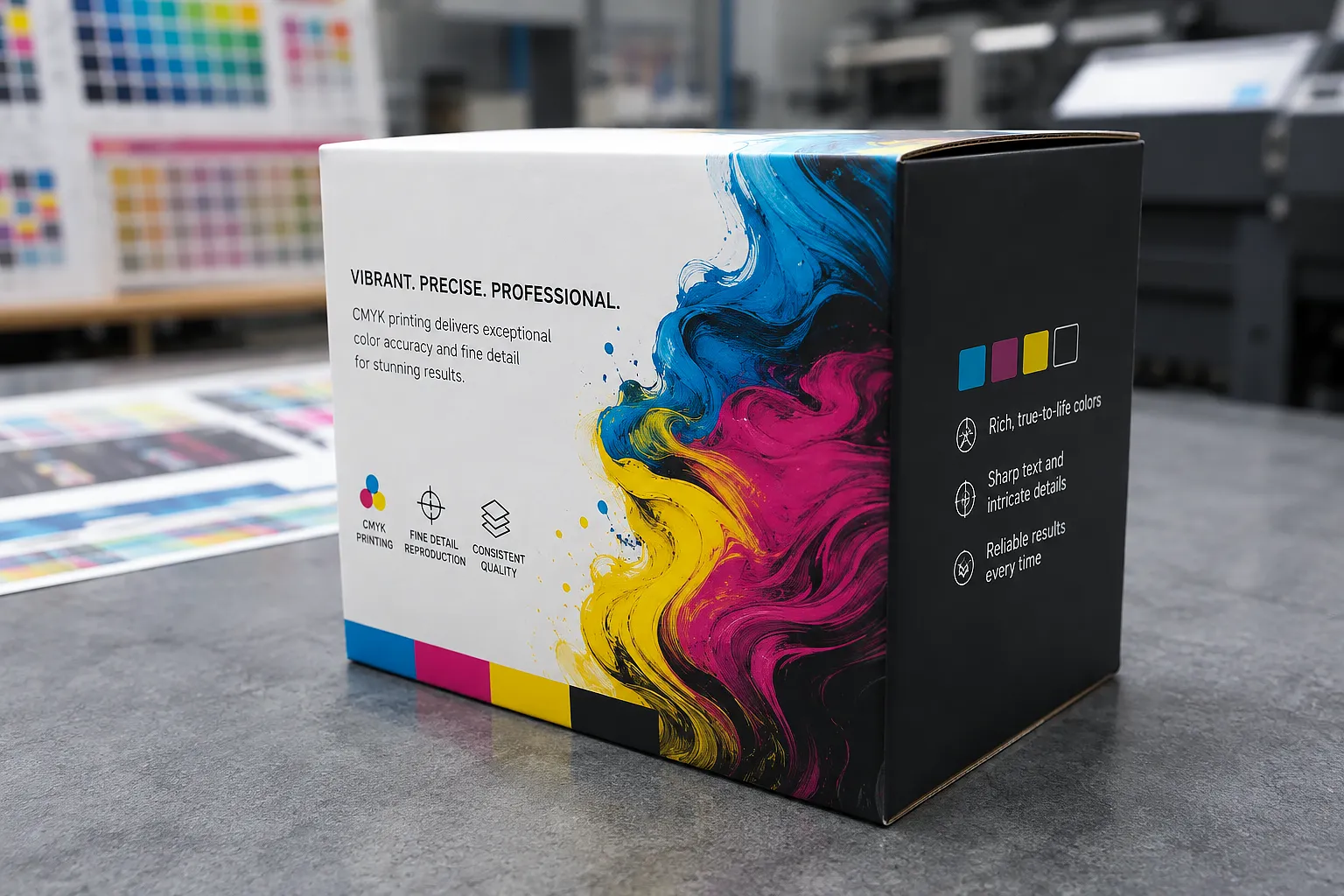
CMYK stands for cyan, magenta, yellow, and black. Rather than using a separate ink for every visible color, the printing process combines these four process colors to reproduce a broad range of images.
This makes CMYK particularly useful for Printed Booklet Boxes featuring product images, directions of use, lifestyle imagery, ingredient lists, and other promotional or informative graphics. This printing method makes booklet boxes product-specific.
For example: skincare packaging
Imagine a skincare company launching a vitamin C serum. If it’s a booklet box for serums, it contains a product photograph, an orange-to-yellow gradient, a botanical illustration, black typography, and several small icons.CMYK is the best method.
On the other hand, imagine the same brand has a distinctive orange logo that must remain visually consistent across hundreds of thousands of packages.
That introduces a different question: CMYK or PMS?
CMYK vs PMS: Which Is Better for Brand Colors?
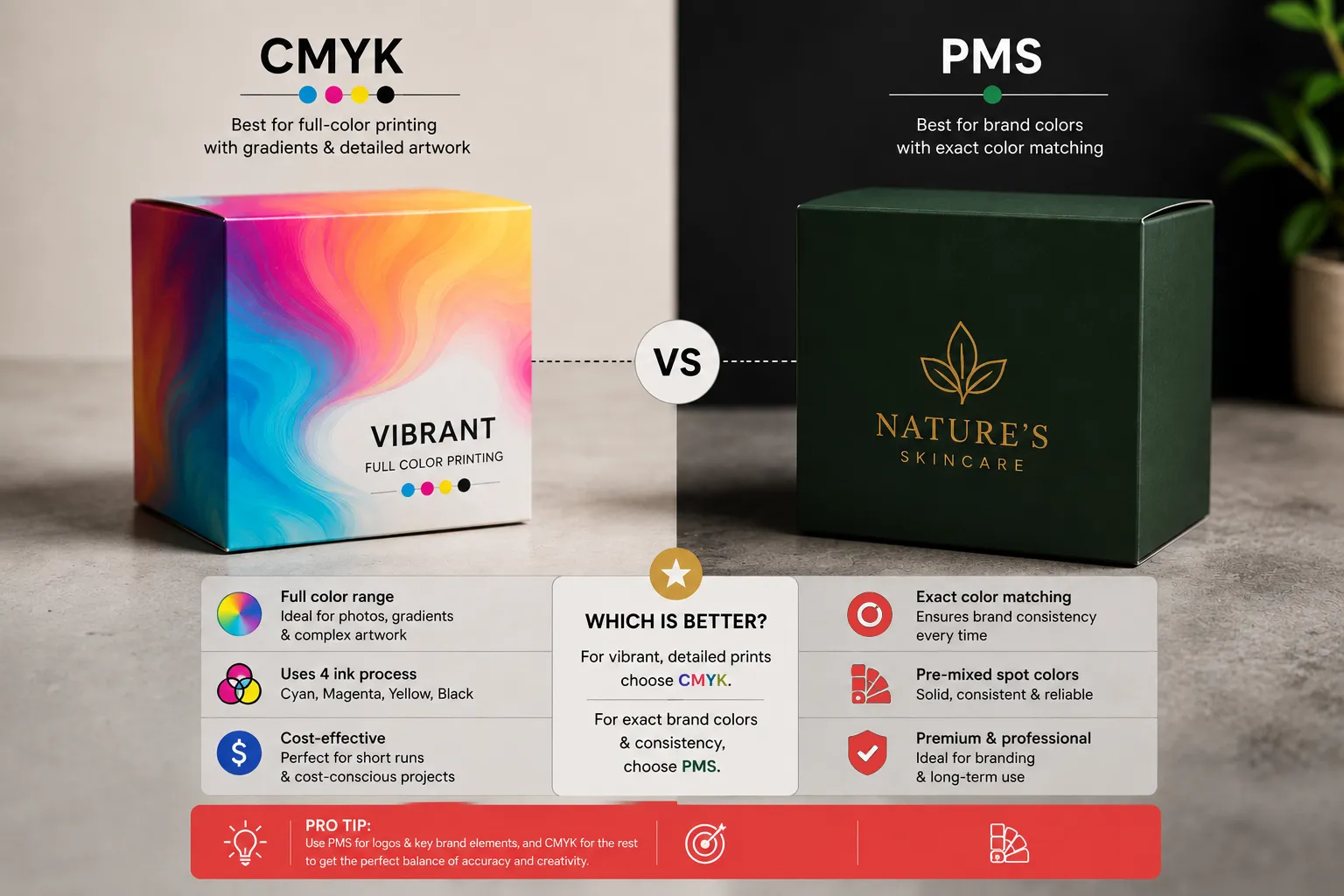
PMS, commonly associated with the Pantone Matching System, uses standardized spot colors.
The distinction is important because CMYK values are not perfectly universal. Pantone itself explains that the same CMYK recipe can produce different results across presses because variables such as substrate absorption, dot gain, ink behavior, equipment, and press conditions affect the final color.
Pantone notes that conventional CMYK can reproduce approximately 55% of PMS spot colors with a visually close result, while expanded-gamut systems using additional colors can substantially increase the range of achievable Pantone colors.
So the question is not whether PMS is “better” than CMYK. It is whether your packaging design needs exact spot-color control.
For example: a recognizable beverage brand
Consider a beverage company whose identity depends heavily on one signature green.
If the front of the beverage box is primarily photographs and gradients, CMYK may be perfectly appropriate.
If the brand’s identity is built around one exact green appearing consistently across every product and every reorder, PMS or another controlled color-matching approach may be worth considering.
For Branded Booklet Boxes, color consistency can matter just as much as the box dimensions.
Digital Printing for Short Runs and Product Testing
Digital printing has changed the economics of smaller packaging orders.
Unlike traditional offset processes, digital systems can print directly from digital artwork without conventional printing plates. That makes them particularly attractive when a company needs flexibility.
Digital printing can be useful for:
- Product launches
- Limited editions
- Prototypes
- Seasonal packaging
- Small-batch products
- Multiple artwork versions
- Market testing
The broader printing market reflects this shift.
Smithers reported that digital print had a global value of $167.5 billion in 2025 and forecasts the market to reach $251.1 billion by 2035. The research also identifies packaging as one of the strongest growth areas for digital printing.
For example: a startup cosmetics brand
Suppose a new skincare company is launching three facial serums. Instead of immediately ordering 50,000 boxes, the company wants 1,500 units of each design to test customer response.
A digital workflow can be attractive because the company can produce shorter runs and test multiple versions without committing to the economics of a huge conventional print run. This is one reason Custom Printed Booklet Boxes Online are increasingly useful for smaller brands and product developers.
Offset Printing for High-Volume Packaging
Offset printing remains highly relevant, particularly for larger commercial production. In offset lithography, the artwork is transferred through printing plates before being applied to the substrate. The initial setup is more involved than digital printing, but the process can become commercially attractive at larger quantities.
Smithers estimates global offset litho revenues at $310.9 billion in 2025, compared with projected digital print sales of $175.2 billion. Offset therefore remains a major part of the global printing ecosystem even as digital technologies expand.
For example: established personal-care brand
Imagine a personal-care company that has sold the same moisturizer for five years and consistently orders 100,000 moisturizer boxes at a time.
The artwork rarely changes.
In that situation, the setup involved in offset printing can be spread over a large production run, potentially making it more commercially attractive than producing every box digitally.
This is where Custom Printed Booklet Boxes Wholesale become particularly relevant.
What About Flexographic Printing?
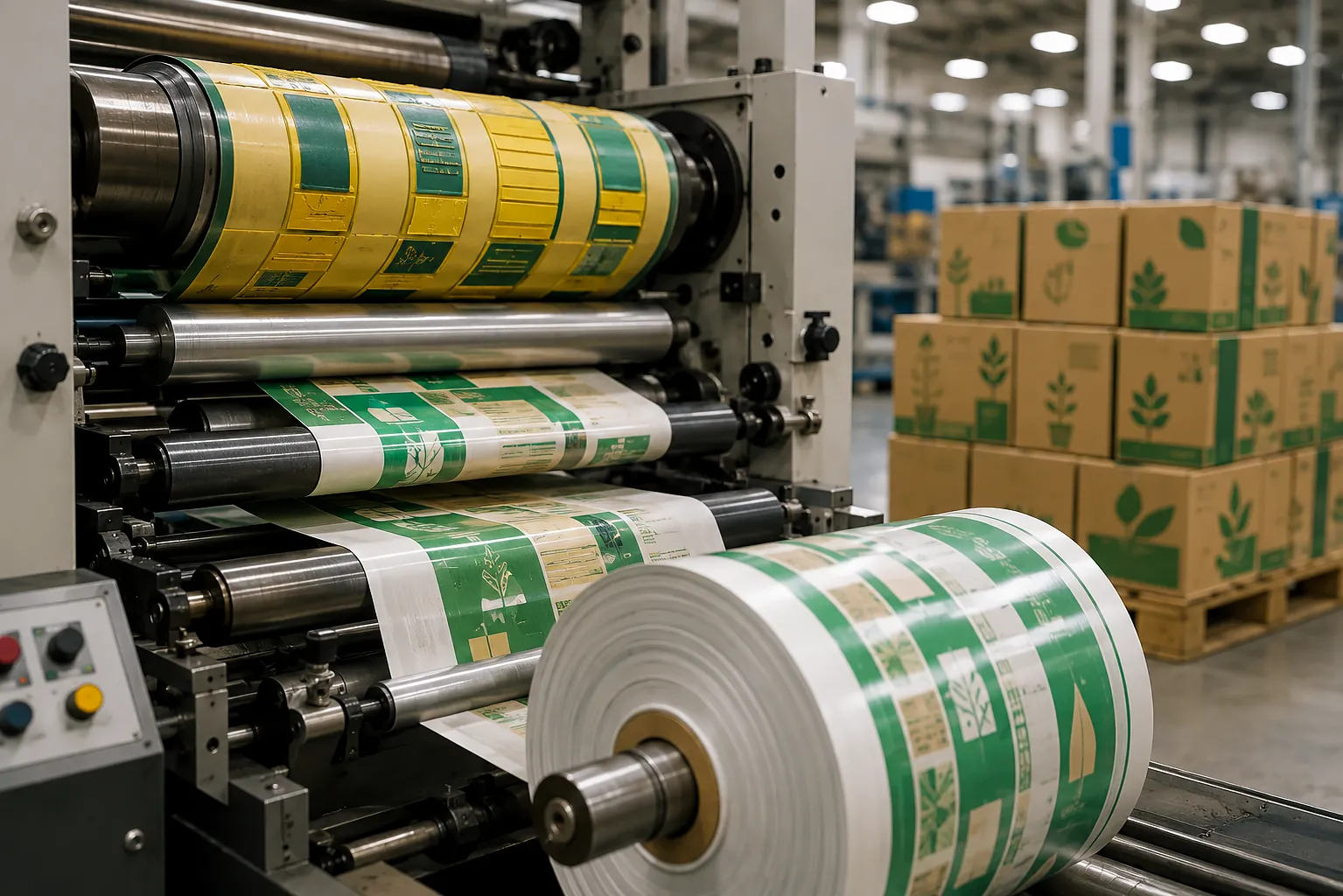
Flexographic printing uses flexible printing plates and high-speed presses. It is widely used across packaging applications, particularly where production efficiency and long runs are important.
Smithers identifies flexographic printing as the largest packaging and label print process by both volume and value.
However, that does not mean flexography is automatically the best choice for every booklet box.
For folding cartons and custom tubes, the appropriate process depends on the substrate, artwork, production quantity, equipment available, and desired print quality.
Can Custom Booklet Boxes Have Full-Color Printing?
Absolutely.
Custom Printed Booklet Boxes can use full-color artwork across the exterior and, where appropriate, the interior panels.
Full-color printing can include:
- Product photography
- Illustrations
- Gradients
- Brand graphics
- Icons
- Ingredient information
- Instructions
- QR codes
- Promotional messages
The important consideration is not simply whether full-color printing is possible. It is whether the artwork has been prepared correctly for the selected printing process.
High-resolution artwork, correct color profiles, appropriate bleed, safe margins, and properly prepared dielines all contribute to a cleaner final result.
Interior Printing: The Space Many Brands Ignore
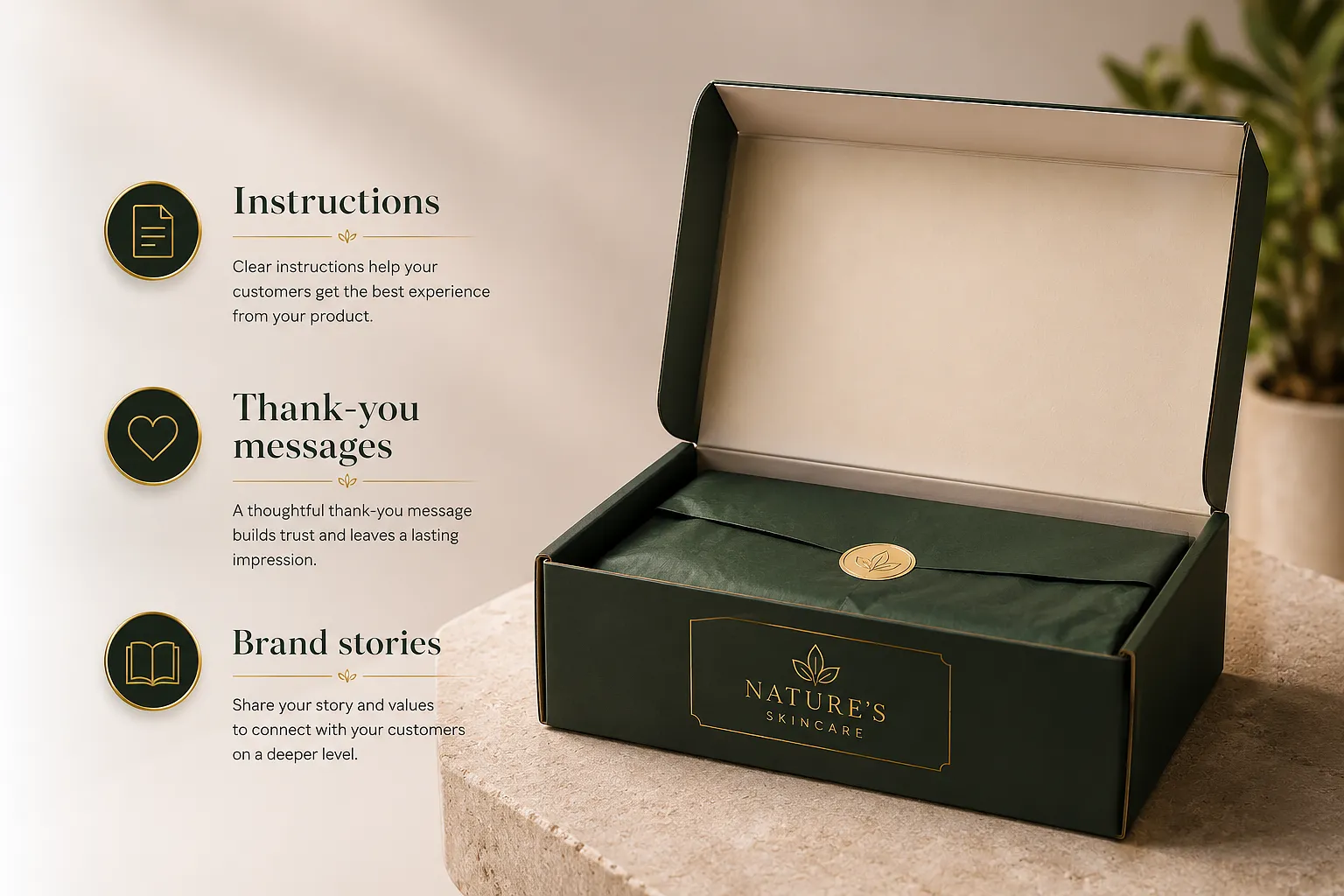
The outside of the box gets most of the attention. The inside is often forgotten. That can be a missed opportunity.
Interior printing can include
- Instructions
- Thank-you messages
- Brand stories
Example: premium beauty packaging
A cosmetic company could keep the outside of its box deliberately minimal: logo, product name, and a clean color palette.
When the customer opens it, the inside could reveal a short message explaining the product’s ingredients or application routine.
That small detail changes the unboxing experience without requiring a completely different packaging structure.
For premium Custom Retail Packaging, this kind of design decision can make the packaging feel more intentional.
How Much Do Custom Printed Booklet Boxes Cost?
There is no universal price because packaging is a specification-driven product.
The cost can change according to Box dimensions, Board thickness, materials, number of colors, and the right size of custom booklet boxes.
For example, a simple 10,000-unit order with CMYK printing may have a very different cost structure from 10,000 boxes using foil, embossing, soft-touch coating, and multiple printed panels.
Otherwise, the cheapest quote may simply be offering a different board, printing process, or finishing package. To know more about cost, see our post on the Custom Packaging guide: Materials, styles, and cost explained.
How to Choose the Right Printing Method
Instead of asking a supplier, “Which printing method is cheapest?”, start with a better set of questions.
- How many boxes do you need? A few hundred, a few thousand, and 100,000 units can have completely different economics.
- Does your design contain photographs? If yes, full-color CMYK printing may be appropriate.
- Does your brand rely on one exact color? Ask about PMS or other color-management options.
- Do you want a premium tactile effect? Discuss soft-touch, foil, embossing, debossing, or spot UV before finalizing artwork.
- Will you reorder the same packaging? If yes, color consistency and repeatability become particularly important.
- Does the box need inside printing? Plan interior artwork before the dieline and production specifications are finalized.
This approach is much more useful than selecting a printing process first and trying to force the design into it afterward.
If you are placing Custom Booklet Boxes in Bulk, request a production sample or approved proof where practical.
That small step can identify color, size, artwork, or finishing problems before thousands of units are produced.