Packaging is much more than just a protective covering. It is a great marketing tool, a reflection of what your brand is, and it is an opportunity to ensure a memorable unboxing experience for customers. Regardless of whether you are selling cosmetics, electronics, food, or apparel, the right packaging can make your product shine, make customers happier, and even sell more products.
This guide will take you through all you need to know about custom packaging materials, styles and costs as well as practical tips to create a packaging that works with your brand.
Custom Packaging- Why it’s Important!
Custom packaging is a critical aspect of creating your brand and enhancing customer experience. The reason why it matters is as follows:
Build Brand Recognition
All the details of your packaging, whether its color, font, texture, and shape, all convey your brand identity. High-quality and consistent packaging enable customers to immediately identify your brand, even before seeing your brand logo. This realization in the long run may lead to trust and loyalty which is very important in highly congested market places such as e-commerce.
Enhance Perceived Value
Even a small product can be made to feel high end through custom packaging. Thick cardboard, soft-touch finishes, or embossed logos are indicators of quality and attention to detail. It is a known fact that customers tend to think that better packaged goods are more valuable, which can justify higher prices and even improve the perception of the brand.
Improve Customer Experience
The packaging influences the way your customers handle your product. Packages that are easy to open allow the customers to enjoy the unboxing experience, whereas poorly designed packages can result in frustration and returns. Unique packaging can surely promote social sharing, which enhances the organic presence of your brand.
Support Sustainability
Eco-conscious consumers are more inclined to brand loyalty to brands that are concerned with sustainability. Using recyclable, reusable, or biodegradable material to package your product conveys your social responsibility and aligns your brand with your environmental values.
How to Select Appropriate Packaging Materials?
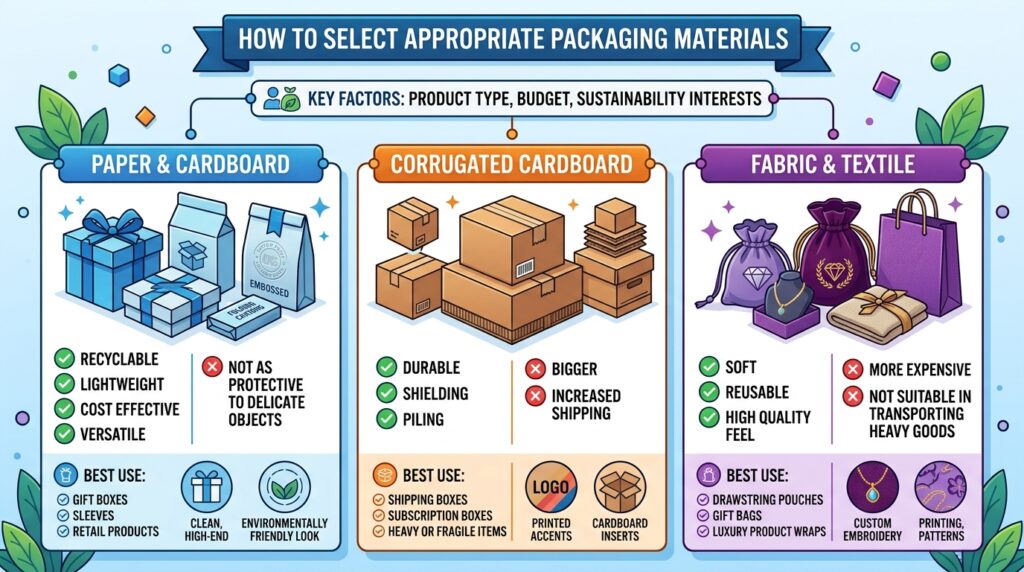
Material selection varies based on your product type, budget, and sustainability interests. The most popular ones are summarized here:
Paper & Cardboard
Paper and cardboard are lightweight, versatile, and eco-friendly. They may be printed, coated, or embossed to produce aesthetically pleasing packaging.
- Advantages: Recyclable, lightweight, cost effective, versatile.
- Disadvantages: Not as protective to delicate objects.
- Best use: Gift boxes, sleeves, folding cartons, retail products.
Paper packaging is best suited to brands desiring a clean, high-end, or environmentally friendly look. You can add a matte or gloss finish, or emboss your logo, to add some class to even plain cardboard boxes.
Corrugated Cardboard
Corrugated cardboard is stronger and more durable as compared to the normal paperboard and therefore is ideal in shipping and protection.
- Advantages: Durable, shielding, piling.
- Cons: Bigger, increased shipping.
- Best to: Shipping boxes, subscription boxes, heavy or fragile items.
Corrugated boxes may be fully customized with printed logos, color accents, or cardboard inserts to provide additional protection and organization.
Fabric & Textile
The packaging made of textiles is luxurious and reusable, and commonly linked to high-end products such as jewelry or clothing.
- Advantages: Soft, reusable, high quality feel.
- Disadvantages: More expensive, not suitable in transporting heavy goods.
- Best to use: Drawstring pouches, gift bags, luxury product wraps
Your packaging can really shine through custom embroidery, printing or patterns on fabric pouches.
Popular Packaging Styles
The way your packaging is done will influence how it is presented and how it functions. The following is a guide to the popular styles:
Rigid Boxes
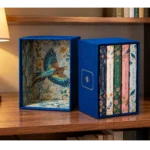
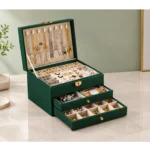
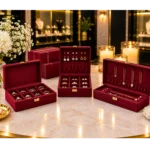
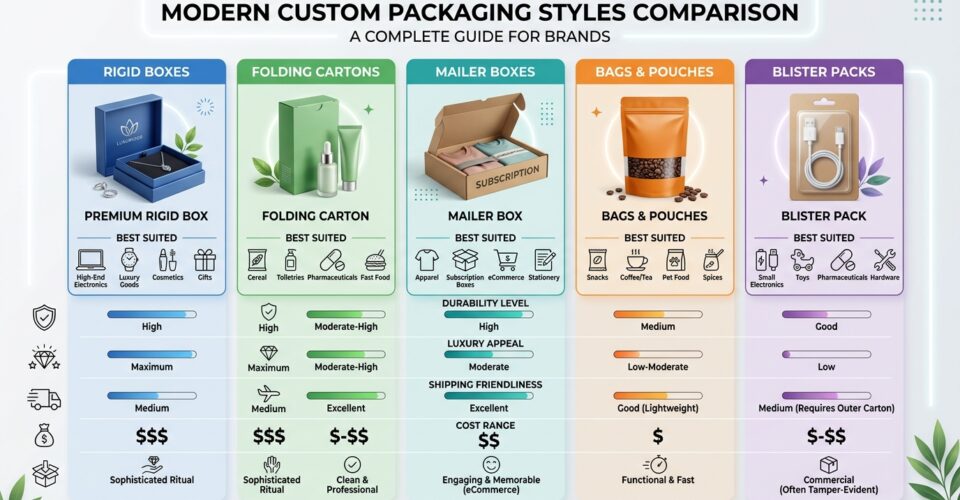
Rigid boxes are durable and are luxurious. They are the best to use on goods such as electronics, jewelry, and cosmetics.
Provide an exceptional unboxing experience.
- May contain magnetic closures, compartments or inserts.
- Frequently combined with special wraps or tissue paper.
Rigid boxes are one of the most popular and luxurious box styles. If you want to know about these boxes see our detailed post: Why rigid boxes are the ultimate luxury packaging choice.
Folding Cartons
Folding cartons are light, versatile and can be easily printed on. They are ideal in retail products such as foods, beauty, and small electronics.
- Economical when customized in large quantities
- The flat form or pre-assembly is easy to store
- Easily printed with high-quality graphics or spot finishes
Do you get confused between rigid boxes or folding cartons? Here is a detailed post to make the right choice. Rigid boxes Vs Folding Cartons: An Ultimate Guide to Choosing Your Product’s Power Suit
Mailer Boxes
Mailer boxes are developed to accommodate e-commerce and subscription service. They compromise durability with presentation such that the products reach safely.
- Best used with subscription boxes or regularly shipped products.
- May contain inserts to ensure that it does not move during transit.
- Frequently printed inside and out to create a wonderful unboxing experience.
Bags & Pouches
This flexible packaging (like bags and pouches) is popular with apparel, gifts, and small accessories.
- Reusability abilities of these bags and pouches give branded appeal.
- Printable, embroiderable, or heat-stampable options available.
- Light and inexpensive to transport, so preferable by brands.
It includes more than a dozen packaging options including paper bags, mylar bags, standup pouches, and Kraft paper bags.
Blister Packs & Clamshells
They are secure display packaging that are commonly utilized in electronics, toys, and hardware.
- Offer visibility of products in a crowded market place
- Suitable to retail display shelves.
- Can have molded compartments to secure products in position.
Custom packaging: Is it Really Expensive?
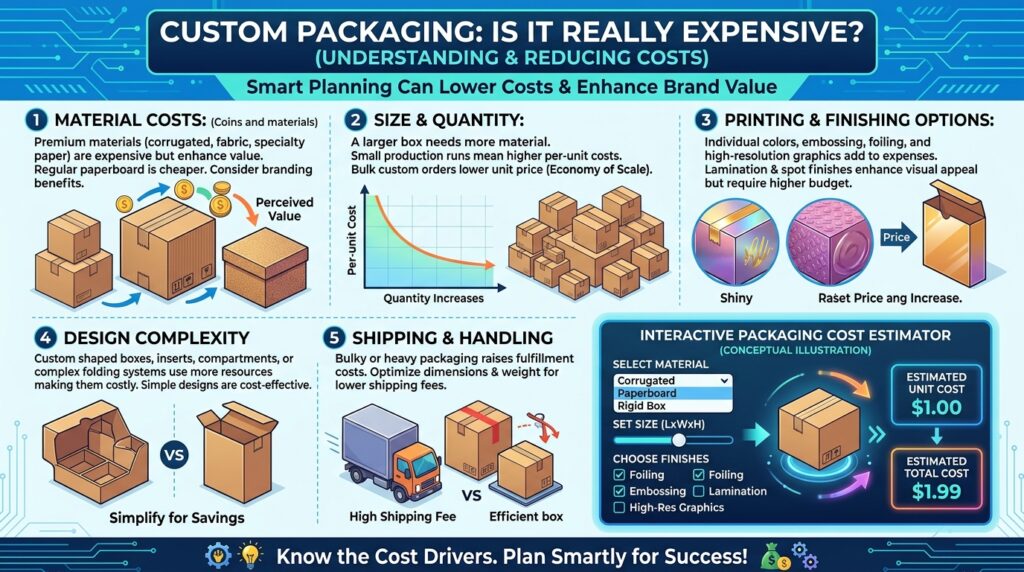
Custom packaging is expensive, only if you don’t know the ways to cut down cost. Knowing what influences the cost will guide you to plan your packaging strategy successfully:
Material Costs
Premium materials are expensive but tend to enhance the value of your product in the eyes of the customers. Corrugated cardboard, fabric, and specialty papers are likely to add to the cost when compared to regular paperboard, but building brand like benefits often insists brands to overlook the cost.
Size & Quantity
A larger box needs more material and a smaller production run tends to have a higher per-unit cost. So customize in bulk as large scale production will lower the unit cost.
Printing & Finishing Options
Individual colors, embossing, foiling, and high-resolution graphics add to expenses. Matte or gloss lamination and spot finishes also add to your budget but will enhance the visual appeal.
Design Complexity
Custom shaped boxes, inserts, compartments, or folding systems require more resources to make, making them costly. Simple designs are more cost-effective and easier to manufacture.
Shipping & Handling
Bulky or heavier packaging can raise the fulfillment costs and therefore in the packaging designs, it is suggested to consider the optimization of shipping.
Hint: An interactive cost estimator can help people estimate the cost of packaging based on material, size, quantity and finish- this will help the readers engage in the information provided and also offer actionable information.
Packaging tips: How to design a package that sells.
To design efficient packaging, a balance must be maintained between the aesthetics and the practicality of the packaging.
Maintain Brand Consistency
Use your brand colors, fonts, and logos in a strategic way. Your brand identity should be supported through packaging and create an overall experience throughout all products.
Striking Funniness and Form.
The packaging should be able to safeguard the products, it should be user-friendly and attractive. Consider ease of opening, product security and storage.
Prioritize Sustainability
Green packaging appeals to the contemporary consumers. Whenever possible, use recyclable, biodegradable, or reusable materials.
Optimize for Shipping
Avoid customizing larger and heavier boxes as it costs more to ship or may result in damaged goods, if loosely packed. Your packaging should be tested by your shipping partners to make sure that it is packageable.
Conclusion
Custom packaging is a strategic investment that impacts branding, customer experience, and sales. Knowing materials, styles, and costs, you will be able to make wise decisions, which will safeguard your products, delight your customers, and develop your brand.
Proper packaging does not only ensure that your product is safely delivered, but also leaves a lasting impression that makes customers come back. To get all these benefits, the choice of packaging and printing company in your area is also equally important. Contact Pack Role packaging estimators and experts today and see the difference in price, style, material and cost, altogether,