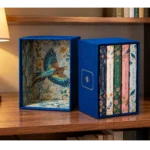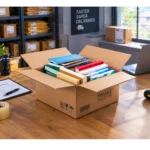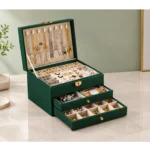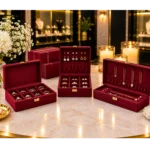
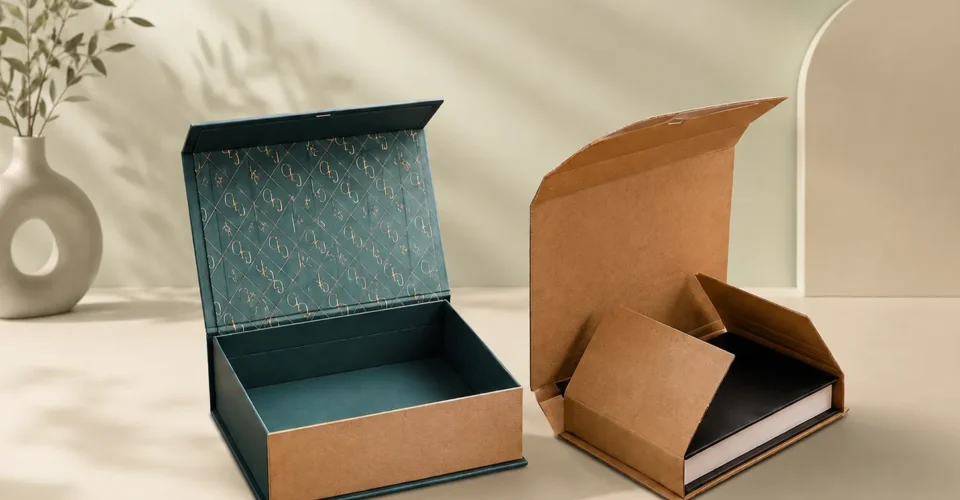
Booklet boxes introduce an entirely new form of packaging with an exciting unboxing. Whether it’s about giving jewelry sets additional protection or preventing facial kits from damage, the book style is always prioritized by the elite class. Custom book boxes offer brands the flexibility to create distinctive packaging with premium printing, custom sizes, and finishes that complement the product inside.
What are booklet boxes? A booklet is not only a style; rather, it’s an opportunity for brands to cast spells over viewers. Extraordinary printing, premium packaging, non-compressible structure, and affordable marketing-a well-formed box does more than just protect the product.
Rigid vs cardboard booklet boxes- choosing the right type is important. If you are going to launch a new product or want to revamp packaging, don’t go anywhere. In today’s post, Packrole experts bring fruitful insights into the prime differences between rigid and cardboard booklet boxes.
Rigid and Cardboard Booklet Boxes
Rigid and cardboard booklet boxes can both be customized with professional printing, branded artwork, inserts, and specialty finishes. The difference lies mainly in their construction, weight, strength, storage requirements, cost, and how they position the product in the customer’s mind.
Research also supports the idea that packaging is not a passive container. A 2025 experimental study involving 490 tea consumers found that visual elements including color, graphics, logos, and layout influenced purchase intention. Other studies have found that packaging cues can influence perceived quality, attractiveness, willingness to pay, and purchase-related behavior.
So, which is actually better: rigid or cardboard? The answer depends on the product, customer expectations, supply chain, and packaging budget.
Rigid vs Cardboard Booklet Boxes at a Glance
Before choosing a format, it helps to understand what each structure is designed to accomplish.
| Factor | Rigid Booklet Boxes | Cardboard Booklet Boxes |
| Structural strength | Generally higher | Depends strongly on board grade and construction |
| Weight | Usually heavier | Usually lighter |
| Premium feel | Excellent | Can range from basic to premium |
| Storage | Less space-efficient when assembled | Often more efficient |
| Product presentation | Strong luxury and gift appeal | Flexible for retail presentation |
| Custom printing | Extensive | Extensive |
| Inserts | Easy to integrate | Available with suitable construction |
| Shipping | Higher weight can increase logistics considerations | Lower weight can be advantageous |
| Typical positioning | Premium and luxury products | Mass, mid-range, and premium products |
| Cost | Usually higher | Often more economical |
This comparison should not be treated as an absolute rule. A thick, well-engineered cardboard box can outperform a poorly specified rigid box for a particular application. The complete package structure matters.
What Are Rigid Booklet Boxes?
Rigid booklet boxes are manufactured from thick, stiff boards that retain their shape during use. They are different from fording cartons and designed for different products. Rigid boxes vs folding cartons invites another debate. Instead of behaving like a lightweight folding carton, a rigid box provides a firm outer structure.
A common format uses a book-style opening, where a hinged panel opens from the front or side. Magnetic closures, ribbon pulls, or other opening mechanisms can also be incorporated depending on the design.
The rigid structure is particularly useful when the packaging itself is part of the product presentation. It works well as gift boxes, luxury jewelry boxes, candle boxes, and cosmetic boxes. A customer immediately feels the difference between a lightweight carton and a substantial box, and research into packaging haptics shows that characteristics such as rigidity, thickness, surface feel, and weight can influence consumer perceptions.
That does not mean a heavier package automatically makes a product better. Rather, physical cues can contribute to the perceived positioning of the product when they are consistent with the brand and category.
What Are Cardboard Booklet Boxes?
Cardboard booklet boxes are generally made from paperboard or cardboard structures that may use a folding, hinged, or book-style construction.
The major advantage is flexibility in manufacturing and logistics. Many cardboard formats can be produced using relatively lightweight boards and may occupy less space during transportation or storage.
That makes them useful for brands that need to package larger quantities while controlling shipping weight and warehouse requirements. Thus, it can be used as shipping boxes, promotional boxes, e-commerce boxes, and bakery boxes.
The term “cardboard” also covers a wide range of constructions. A premium paperboard carton with sophisticated printing is very different from a basic low-caliper box. Therefore, comparing only “rigid” against “cardboard” can be misleading without considering board thickness, grammage, structure, inserts, and finishing.
When Should You Choose Rigid Booklet Boxes?
The strongest case for rigid construction is usually made when presentation and structural performance are central to the packaging strategy.
Premium and luxury products
Luxury products often rely on multiple sensory cues to communicate value. The box may be the first physical object the customer handles before experiencing the product.
Experimental research supports the wider role of packaging in premium positioning. In one study of wine packaging, more luxurious external boxes increased willingness to pay. While packaging containing explanatory elements or a transparent window generated stronger product attitudes; perceived luxury explained much of these positive effects.
For products positioned at a higher price point, a substantial rigid structure can therefore complement other luxury cues such as foil stamping, embossing, debossing, custom inserts, and carefully controlled color systems.
Fragile or presentation-sensitive products
A rigid outer shell can be useful for products that need protection from compression or handling. However, the box itself is only part of the solution.
A good packaging specification considers the product’s dimensions, weight, fragility, internal movement, and distribution environment. A foam, paperboard, or molded insert can provide additional positioning and cushioning inside the box.
In other words, the best rigid box packaging is not necessarily the thickest one. It is the one engineered around the product.
Products where unboxing matters
A booklet-style opening creates a different interaction from a conventional carton. This can be especially valuable for gift sets, cosmetics, electronics, jewelry, promotional kits, and other products where presentation is part of the buying experience.
Recent research on multisensory packaging found that unboxing interaction affected perceived attractiveness and semantic impressions, with more complex opening interactions receiving more positive evaluations in that specific experimental setting.
That does not mean every package should have a complex opening. It means the opening mechanism itself can become part of the customer experience when appropriately designed.
When Is Cardboard a Better Choice?
Rigid packaging is not automatically the right answer for every brand.
For products with high sales volumes, relatively low margins, or long distribution routes, packaging weight and logistics efficiency may be much more important.
Cardboard booklet boxes can be particularly practical when a brand needs:
- Lightweight packaging
- Efficient warehouse storage
- Higher-volume production
- Flexible retail packaging
- Frequent artwork changes
- Lower material usage
- Easier transportation
A retailer selling a large seasonal collection, for example, may prefer custom cardboard booklet boxes because efficient storage and shipping can outweigh the additional presentation offered by a rigid structure.
This is especially relevant for e-commerce and international distribution, where packaging weight can become a significant part of logistics planning.
Research on packaging life cycles illustrates why weight should not be ignored. A B2B case study comparing packaging alternatives found that the heavier cardboard option produced a higher carbon footprint in that particular supply chain because of added weight, long transport distances, and airfreight dependence. The result should not be generalized to every packaging system, but it demonstrates an important principle: material sustainability cannot be evaluated independently of transportation and system design.
Which Box Is More Durable?
Rigid construction generally offers greater structural rigidity than lightweight folding cartons. However, durability is determined by several interacting variables.
A packaging engineer or supplier may need to assess:
- Board thickness
- Box dimensions
- Product weight
- Closure design
- Internal clearance
- Insert construction
- Stacking conditions
- Distribution and shipping environment
For fragile goods, a cardboard box with the right dimensions and insert can provide adequate protection. Conversely, simply choosing a rigid structure does not guarantee that a product will remain secure during transport.
This is why sturdy booklet boxes should be specified around the actual application instead of judged only from photographs or material names.
Which Looks More Premium?
This is where rigid construction often has an advantage.
A thicker board creates a firm hand-feel that can reinforce expectations of durability or quality. Research into packaging haptics has repeatedly shown that tactile and visual properties can affect consumer reactions.
Transitioning from sight to hands-on touch shifts economic intent, driving a positive Willingness to Pay (WTP) increase for 57% of consumers, while decreasing it for 14% due to sensory friction.
Another study using 343 Brazilian consumers found that packaging design affected perceived quality and purchase intention for honey products.
However, a premium presentation is not simply about making a box heavier or more elaborate. Overdo can have a significant decrease in WTP.
Custom Options for Rigid and Cardboard Booklet Boxes
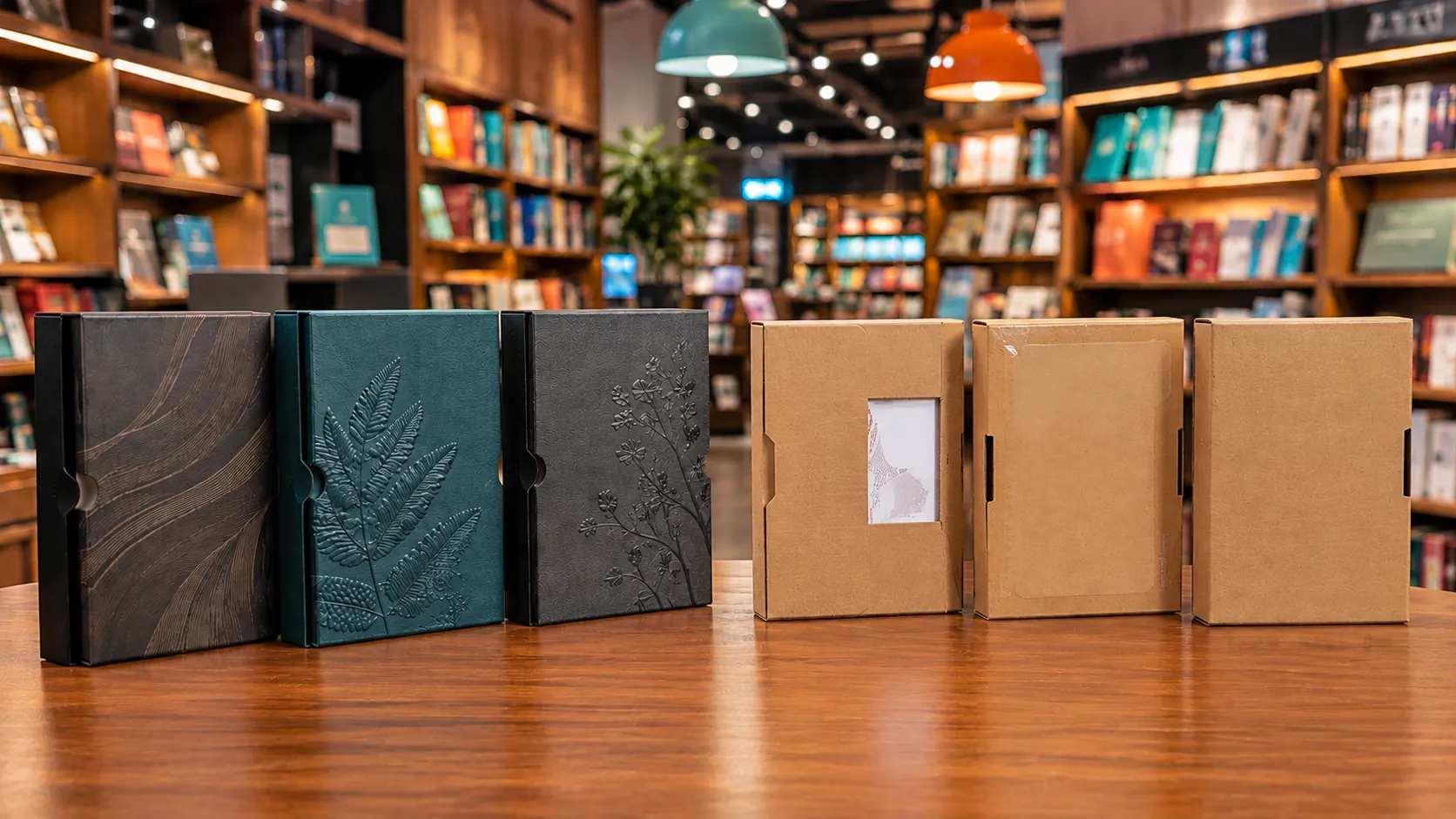
Both structures provide significant opportunities for customization.
Structural customization
Depending on the product, brands may specify:
- Custom length, width, and depth
- Hinged or book-style opening
- Magnetic closure
- Folding structure
- Interior compartments
- Foam or box inserts
- Custom box thickness
For custom rigid boxes, the structural specification should be developed around the product dimensions rather than simply selecting a standard size.
Printing and branding
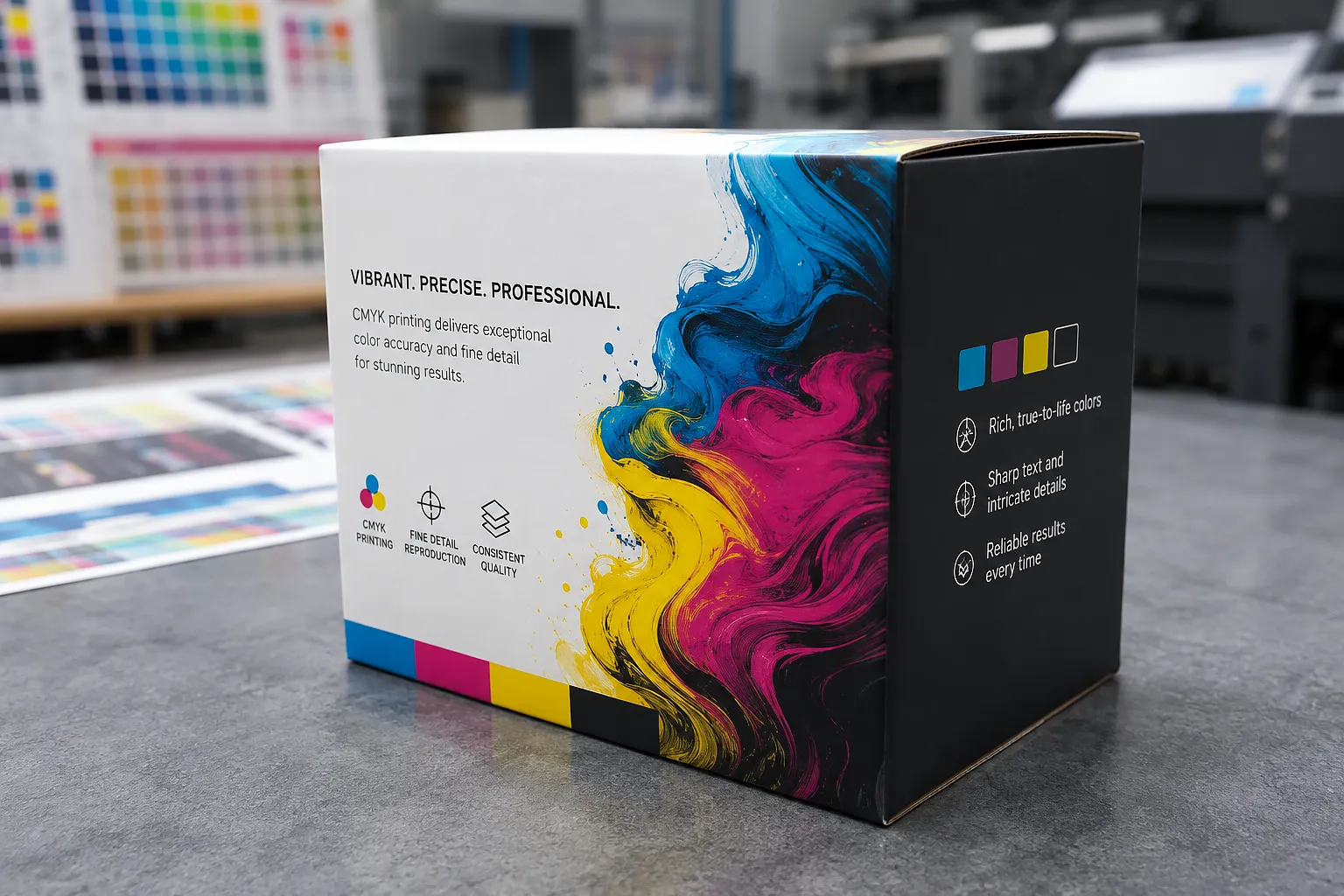
Printed packaging provides a large visual communication area. Brands can use logos, illustrations, product information, patterns, brand colors, and typography to establish a consistent identity.
A 2025 study examining 14 packaging prototypes found significant relationships between several visual elements and purchase intention, particularly through consumers’ brand experience.
Common customization options include CMYK printing, PMS colors, foil stamping, embossing, debossing, spot UV, matte finishes, and soft-touch coatings.
The goal should not be to use every available finish. Selective finishing often produces a more controlled result. Printing options for custom printed booklet boxes vary by customer and industry.
Rigid Packaging vs Cardboard: What About Sustainability?
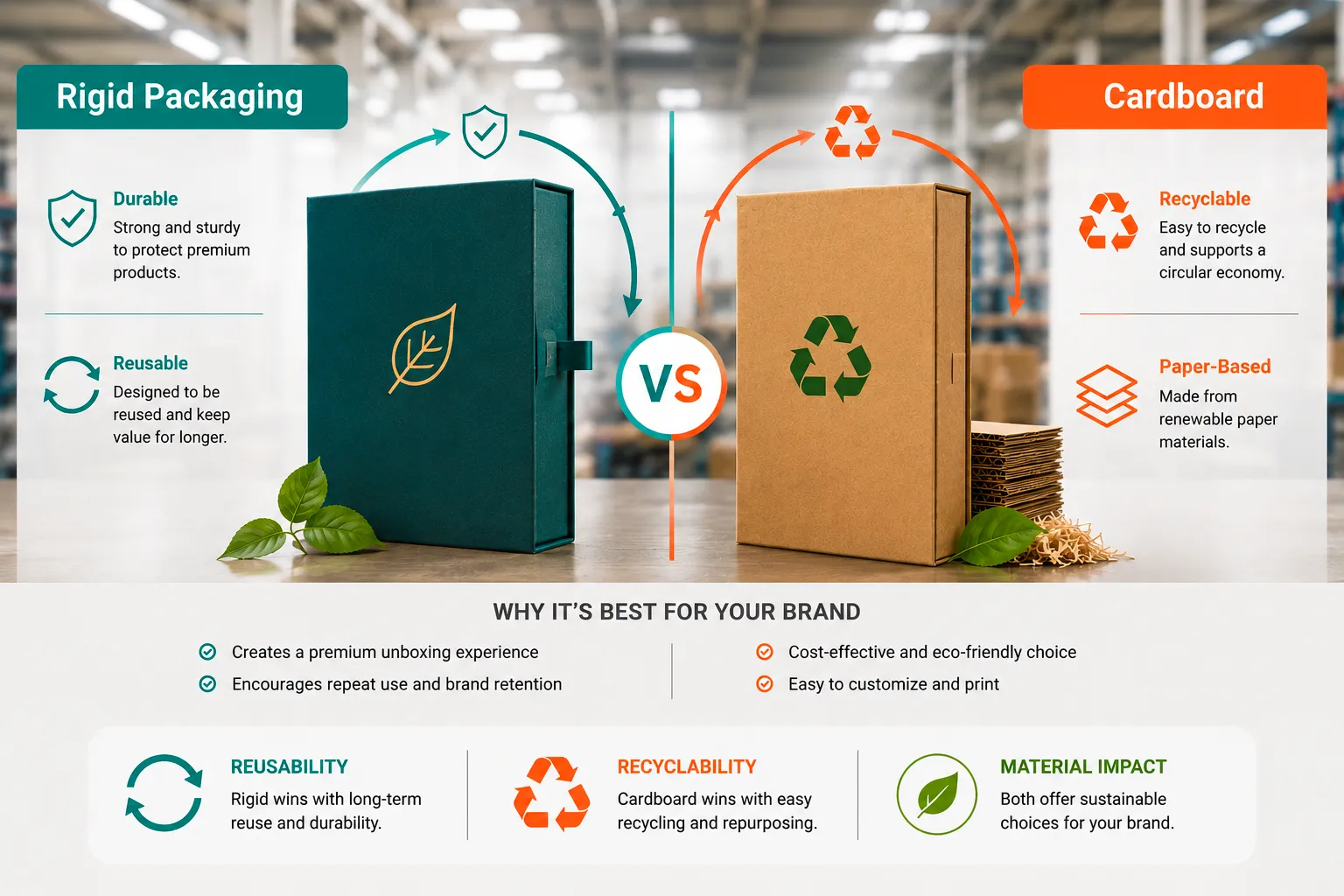
Sustainability is one of the areas where simplistic comparisons can be misleading.
Paperboard and cardboard are fiber-based materials, and recycling systems can recover significant quantities of paper and board. Research has also identified economic and environmental benefits associated with recycling paper and board instead of relying exclusively on virgin paper production.
However, recyclability depends on the complete package. Coatings, adhesives, mixed materials, contamination, collection systems, sorting infrastructure, and local recycling processes can all affect what happens at end of life.
A 2026 life-cycle assessment of paper and board waste found that transport, stock preparation, and thermal treatment were important contributors to environmental impacts across the recycling scenarios studied.
This matters when comparing rigid and cardboard formats. A heavier structure may require more material and transport energy, while a lighter structure may reduce logistics impacts. On the other hand, a reusable package may have a different life-cycle profile depending on how many times it is actually reused.
So instead of asking, “Are rigid boxes sustainable?” the more useful question is:
What is the environmental impact of this specific packaging system across its entire life cycle?
Which Packaging Is Better for Shipping?
Shipping considerations can change the decision significantly.
Rigid boxes are generally assembled and therefore occupy their finished volume before reaching the filling stage. They also tend to weigh more than lightweight folding structures.
For large-scale distribution, this can influence:
- Freight cost
- Pallet utilization
- Warehouse space
- Handling
- Transportation emissions
- Storage requirements
Research on packaging and logistics repeatedly shows that weight and transportation distance can materially affect environmental performance.
For this reason, brands should assess packaging together with their distribution model. A rigid format may make sense for a premium product sold through selected retail locations, while a lightweight cardboard structure may be more appropriate for a product shipped individually through e-commerce.
Which Booklet Box Is Right for Your Brand?
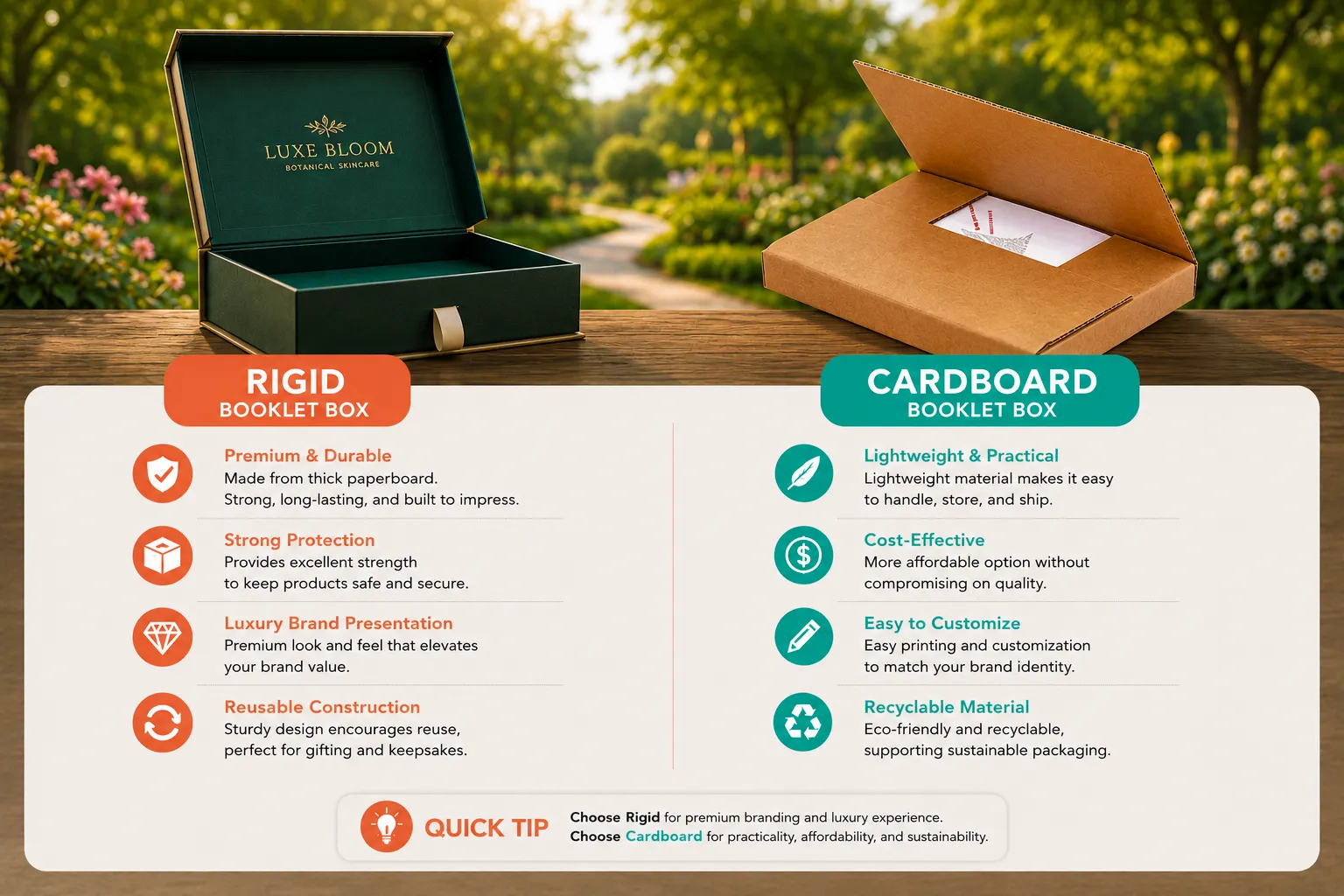
A practical decision framework is more useful than choosing rigid or cardboard based on appearance alone.
Choose rigid when:
Your priority is premium presentation, stronger structural rigidity, luxury positioning, or a high-impact unboxing experience.
Choose cardboard when:
Your priority is lower weight, efficient transportation, compact storage, high-volume distribution, or tighter packaging economics.
Consider a hybrid strategy when:
You have multiple product tiers and want packaging to reflect different price points or customer experiences.
For example, a cosmetics company could use rigid packaging for limited-edition gift sets while using printed folding cartons for its standard collection. This allows structural investment to follow the commercial importance of each SKU.
How Much Should You Spend on Packaging?
The right packaging budget depends on what the package needs to accomplish.
A useful approach is to evaluate packaging against five areas:
- Product value: Does the packaging need to support a premium price?
- Protection: Could inadequate packaging increase product damage or returns?
- Customer experience: Is opening the package part of the brand experience?
- Logistics: How much will weight and volume affect shipping and storage?
- Volume: Will the order size make a more sophisticated packaging structure commercially practical?
This framework is more useful than comparing unit prices alone.
For businesses exploring custom rigid booklet boxes wholesale, the final specification should ideally consider board construction, dimensions, printing, inserts, finishing, quantities, and distribution requirements together.
Why Choose Packrole for Custom Booklet Packaging?
A packaging supplier should be able to work beyond a basic box template and help translate the product requirements into a suitable structure.
Packrole can support brands exploring customized rigid and cardboard booklet packaging with options for dimensions, printing, finishing, structural configurations, and inserts.
For brands developing custom rigid packaging boxes, the key advantage of approaching the project specification-first is the ability to consider presentation, protection, and practical logistics together.
The same principle applies when sourcing custom cardboard booklet boxes. Instead of choosing a package solely because it looks attractive, brands can develop the structure around the product’s dimensions, retail environment, shipping conditions, and target customer.
Final Verdict: Are Rigid Booklet Boxes Better Than Cardboard?
There is no universal winner.
Rigid booklet boxes are generally the stronger choice when premium presentation, structural rigidity, luxury positioning, and unboxing experience are central to the product strategy.
Cardboard booklet boxes may be more appropriate when lightweight construction, storage efficiency, distribution, and packaging economics are higher priorities.
The smartest packaging decision is therefore not “rigid is better” or “cardboard is better.” It is choosing the construction that delivers the right balance between protection, presentation, cost, weight, customization, logistics, and sustainability.
Frequently Asked Questions
Are rigid booklet boxes better than cardboard boxes?
Rigid boxes generally offer greater structural rigidity and a more substantial presentation, while cardboard boxes are often lighter and more efficient for storage and shipping. The better option depends on the product and business requirements.
Are rigid booklet boxes worth the extra cost?
They can be worthwhile for luxury, premium, fragile, giftable, or presentation-focused products where the packaging contributes meaningfully to perceived value and customer experience.
Which box is more durable: rigid or cardboard?
Rigid construction is generally more structurally rigid, but overall durability depends on board thickness, dimensions, closure, inserts, and the distribution environment.
Can cardboard booklet boxes look premium?
Yes. High-quality printing, typography, structural design, foil stamping, embossing, debossing, spot UV, and specialty coatings can create premium-looking cardboard packaging.
Can I order custom printed rigid boxes?
Yes. Rigid structures can be customized with brand artwork, logos, colors, product information, and a range of decorative finishes.
Are rigid boxes more sustainable than cardboard boxes?
Not necessarily. Sustainability depends on material quantity, recycled content, coatings, adhesives, transportation, reuse, recycling infrastructure, and end-of-life treatment. Life-cycle assessment is a better basis for comparison than material type alone.
Which packaging is better for shipping?
Lightweight cardboard can have an advantage when freight efficiency is important, while rigid packaging may be justified when stronger protection or premium presentation is required.
Can rigid booklet boxes include product inserts?
Yes. Inserts can be designed to hold individual products securely and create organized presentations inside the package. Depending on the application, cardboard, paperboard, foam, or other insert materials may be considered.
Can I order custom rigid booklet boxes wholesale?
Yes. Wholesale projects can be developed according to required dimensions, board construction, printing, finishing, inserts, and order quantity.
How do I choose the right booklet box packaging?
Start with the product dimensions, fragility, retail position, packaging budget, shipping method, storage requirements, and desired customer experience. These factors will help determine whether rigid or cardboard construction is more appropriate.