

Maintaining your brand elegance is easy when shipping a single book. A wonderful ribbon bow, a magnetic rigid box, and a classic gold/silver embossed brand logo can uplift the unboxing experience. Flipping the picture, maintaining the same elegance while shipping books in bulk is not as easy. Heavy load capacity, a boring large-box appearance, and higher pricing make it tough to keep innovation throughout the shipment.
When businesses want to maintain that same class during bulk book shipment, here comes the role of book cartons. Whether for publishers, online sellers, e-commerce book dealers, or warehouses, packing, storing, shipping, moving, and stocking become easy with corrugated shipping cartons.
So,
The right book carton depends on the dimensions and weight of your books, the number of copies per carton, how the cartons will be handled, and whether they will be stacked or shipped.
A carton that works well for lightweight paperbacks may not be suitable for textbooks, large hardcovers, or long-term warehouse storage. Choosing the correct carton size and corrugated construction can improve packing efficiency while helping reduce movement and damage during handling.
What Is a Book Carton?
Book cartons are corrugated cardboard boxes designed to hold, store, and transport books in quantities greater than a typical individual-order shipping box. They are different from ordinary packaging for their custom printing, sizing, pricing, and quality. A custom printing guide helps new book businesses to get the best option guaranteed.
Unlike a small book mailer intended for one or a few books, a carton is generally used to consolidate multiple copies into one manageable shipping unit. Publishers may use cartons to send finished books from a printing facility to a distribution center, while warehouses and bookstores can use them for inventory storage and replenishment.
Book cartons, unlike a folding carton, can be manufactured in different lengths, widths, heights, board grades, and flute profiles. The appropriate construction depends on weight and the distribution environment.
For bulk applications, the goal is not simply to fit as many books as possible into one container. The carton should remain strong enough to handle its loaded weight and stable enough for storage and transportation.
How Many Books Fit in a Standard Carton?
There is no universal answer to how many books fit in a standard carton because book dimensions vary significantly.
A carton’s capacity is determined primarily by:
- Book length and width
- Book thickness
- Number of books
- Book weight
- Carton internal dimensions
- Orientation of the books
- Required void space or protective material
| Carton Size (L × W × H) | Best For | Approx. Number of Books | Typical Use |
| 12 × 9 × 6 in | Standard paperbacks | 15–25 books | Small publisher orders, bookstore replenishment, and personal collections |
| 14 × 10 × 8 in | Paperbacks and lighter hardcovers | 20–35 books | Mixed book orders and medium-volume storage |
| 16 × 12 × 10 in | Standard hardcovers | 25–40 books | Publisher distribution and warehouse inventory |
| 18 × 14 × 12 in | Mixed book collections | 40–60 books | Bulk storage and larger bookstore shipments |
| 20 × 16 × 12 in | Large quantities of paperbacks | 50–80 books | Bulk distribution and large collections |
| Custom Size | Books with specific dimensions | Depends on book size and weight | Publishers, distributors, libraries, and specialized book formats |
For example, a carton filled with thin paperback novels may hold considerably more copies than the same carton filled with thick hardcover books. A large-format art book may occupy substantially more volume than a standard trade paperback.
The simplest way to estimate physical capacity is to compare the usable internal volume of the carton with the combined volume of the books. However, volume alone is not enough. The total packed weight must also remain appropriate for the carton construction and for safe manual handling.
For commercial packaging, it is better to establish a carton specification based on the actual book rather than rely on a generic “books per carton” figure.
Book Carton Size: Start With the Books
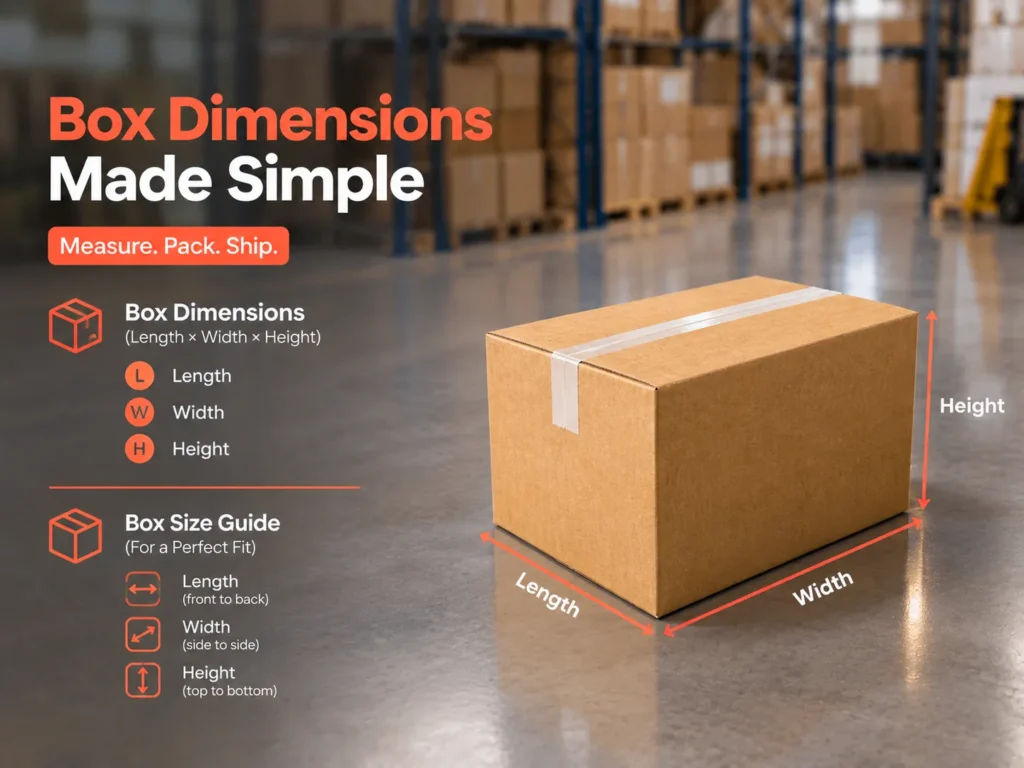
Before ordering cartons, measure the books you actually intend to pack.
Record:
Length × Width × Thickness × Weight
If the carton will contain multiple titles, identify the dimensions and weight of the heaviest or most demanding configuration.
Carton dimensions are normally specified as Length × Width × Height (L × W × H). Internal dimensions are particularly important because the books must fit without excessive compression or unnecessary empty space.
For publishers with standardized titles, it can be useful to establish different carton sizes for different book formats—for example, one carton for standard paperbacks, another for hardcovers, and a heavier-duty option for textbooks.
This approach can improve packing consistency and make warehouse operations easier.
Heavy-Duty Book Cartons: Why Board Strength Matters
Books become heavy very quickly when packed together. This makes the corrugated board construction one of the most important specifications when selecting heavy-duty book cartons.
Corrugated board generally consists of linerboard and a fluted inner layer. The flute contributes to cushioning and structural performance, while the liners provide the outer surfaces and much of the carton’s strength.
Common corrugated constructions include:
- Single-wall: One fluted layer between two liners. Suitable for many standard shipping applications.
- Double-wall: Two fluted layers with three liner layers. Provides greater structural strength for heavier or more demanding shipments.
- Triple-wall: Three fluted layers. Used for particularly heavy-duty applications where additional strength is required.
The appropriate board should be selected according to the packed weight, carton dimensions, stacking conditions, and distribution environment. A larger carton carrying heavy books may require a stronger construction than a smaller carton with the same board grade.
ECT vs. Burst Strength for Book Cartons
When specifying corrugated cartons, buyers may encounter terms such as ECT (Edge Crush Test) and bursting strength.
ECT measures the compressive strength of corrugated board along its edge and is commonly used as an indicator of stacking performance. Burst strength measures the force required to rupture the combined paper structure. For warehouse and palletized applications, ECT can be particularly relevant because cartons may experience compression from cartons stacked above them.
However, a board’s rating should not be treated as a guarantee of a specific carton load capacity. Carton performance is influenced by dimensions, design, moisture, stacking duration, handling, and other factors.
For demanding applications, the finished carton should be evaluated under realistic conditions rather than selected solely from a board-strength number.
Warehouse Book Cartons for Storage

Corrugated fiberboard can lose strength when exposed to moisture, so storage conditions like water-resistance and laminations should be considered when selecting packaging for long-term inventory.
A shipping carton may spend only a few days in transit, but warehouse book cartons can remain stacked or stored for weeks or months. That changes the packaging requirements.
Warehouse storage can expose cartons to:
- Vertical compression
- Repeated handling
- Pallet movement
- Temperature changes
- Humidity
- Extended stacking
Carton dimensions should also work with your existing shelving, pallet footprints, and warehouse equipment. A carton that fits efficiently on a standard pallet can help reduce unused space and improve handling.
Stackable Book Cartons for Publishers and Distributors
A practical carton specification balances:
Book capacity + packed weight + carton strength + pallet utilization + handling requirements.
Publishers and distributors often move cartons by pallet. In these environments, carton dimensions and stacking configuration become important operational considerations. Stackable book cartons should be designed for the expected load rather than simply made as large as possible. Oversized cartons may contain more books, but they can become difficult to handle and may create inefficient pallet configurations.
If cartons are expected to be stacked for extended periods, compression performance becomes particularly important. The bottom cartons on a pallet may carry the weight of multiple cartons above them.
For high-volume distribution, testing the actual filled carton can provide more meaningful information than relying only on theoretical calculations.
Best Cartons for Moving Large Book Collections
If you’re searching for the best cartons for moving large book collections, avoid the temptation to use the largest available box. Books are dense and can quickly make a large carton too heavy for comfortable manual handling. Instead, divide the collection into manageable loads and select cartons that provide an appropriate balance between capacity and weight.
For example:
- Paperback collections can often be packed relatively densely because individual books are lighter.
- Hardcover collections may require fewer books per carton because the combined weight increases quickly.
- Textbooks should receive particular attention because their dense pages and larger formats can produce very heavy cartons.
- Oversized books may need larger carton dimensions rather than simply increasing the number of books per container.
For libraries, bookstores, and moving companies, consistent carton sizes can also make labeling, stacking, and inventory organization easier.
Book Cartons for Publisher’s Bulk Orders

Book cartons for publishers’ bulk orders must have great strength. Yes, this means corrugated cardboard is the best choice. A publisher may need each carton to contain a fixed number of copies—for example, a defined quantity per SKU or title. This makes inventory counting, order picking, palletization, and distribution more predictable.
A production-ready specification may include:
- Internal and external carton dimensions
- Corrugated board grade
- Flute type
- Carton style
- Closure method
- Maximum target packed weight
- Books per carton
- Printing or labeling requirements
- Pallet configuration
Custom cartons can also be designed around specific pallet dimensions to improve cube utilization during transportation.
Cardboard Vs. Corrugated vs Rigid Book Boxes:
| Feature | Cardboard Book Boxes | Corrugated Book Boxes | Rigid Book Boxes |
| Construction | Folded paperboard, usually a single flat board | Fluted corrugated medium between paper liners | Thick, dense paperboard, typically wrapped with printed paper |
| Best for | Lightweight books and retail packaging | Shipping, warehouse storage, and bulk book orders | Premium books, gift sets, and luxury editions |
| Protection | Good for light handling | Very good for shipping and stacking | Excellent for presentation and structural rigidity |
| Weight capacity | Low to moderate | Moderate to high, depending on board construction | Moderate to high, depending on construction |
| Impact protection | Limited compared with corrugated | Good cushioning from the fluted layer | Strong structure, but may need additional cushioning for impact |
| Stacking performance | Suitable for lighter loads | Well suited to stacking when correctly specified | Good structural rigidity; design and construction determine stacking performance |
| Surface for printing | Smooth and easy to print | Good, especially with suitable liner or outer wrap | Excellent for premium graphics and finishes |
| Appearance | Clean and simple | Practical and shipping-focused | Premium and luxury-oriented |
| Customization | Size, printing, die-cutting, closure | Size, flute, board grade, printing, closure | Size, wrap, lid style, inserts, premium finishes |
| Typical applications | Retail book packaging, lightweight orders | Publishers, warehouses, distributors, ecommerce shipping | Collector’s books, special editions, gift sets |
| Storage efficiency | Usually flat-packed | Flat-packed | Often bulkier depending on design |
| Cost | $ Low | $$ Moderate | $$$ Higher |
| Ideal choice when | Presentation and low weight matter | Protection, shipping, and efficiency matter | Premium presentation is a priority |
Which Book Box Should You Choose?
For shipping books: Corrugated book boxes are generally the most practical choice because the fluted structure provides additional cushioning and compression resistance compared with a single paperboard sheet.
For lightweight retail packaging: A cardboard/paperboard book box can be appropriate when the package does not need to withstand demanding shipping conditions.
For premium books: Rigid boxes are ideal when the packaging itself is part of the product experience. For example, collector’s editions, gift books, journals, or luxury publishing.
For publishers and warehouses: Corrugated cartons are usually the strongest starting point because they balance protection, weight, storage, stacking, and cost.
Custom Book Cartons From Packrole
Packrole manufactures Best Book Shipping Boxes for Publishers, Authors and Online Sellers
We can manufacture cartons according to your required dimensions, board construction, printing, and packaging configuration. Instead of selecting a generic carton and adapting your books to it, you can develop the packaging around the actual product and distribution requirements.
Whether you need cartons for standard paperback collections, heavy textbooks, hardcover publications, warehouse storage, or publisher distribution, the specification can be developed around the books you are packing.
How to Select the Right Book Carton
Before requesting a quotation, prepare five basic pieces of information:
- Book dimensions: Length, width, and thickness (measure the product dimensions for a perfect box)
- Book weight: Weight of one copy and the intended number of copies per carton (Know how much a box weighs).
- Carton quantity: How many cartons you require initially and on a recurring basis.
- Distribution conditions: Warehouse storage, parcel shipping, palletized freight, or a combination.
- Special requirements: Printing, labeling, moisture considerations, custom dimensions, or specific pallet configurations (know printing options for custom printed booklet boxes).
Providing these details allows a packaging manufacturer to recommend a more appropriate carton construction rather than quoting a generic box.
Faqs:
What size is a book carton?
A standard moving and packing book carton should be at least as small as 1.5 cubic feet or 16” x 12” x 12” or 40 cm x 30 cm x 33 cm.
What is the standard size of a carton?
There is no simple universal size; however, three common sizes are small (8 x 6 x 4 inches), medium (12 x 8 x 5 inches ), and large (18 x 14 x 8 inches).
How many boxes for 100 books?
For packing 100 books safely, 2 to 5 small or medium-sized book boxes are required. However, the exact size and number of boxes depend on the size and weight of the books to be shipped.
What is the best material for book shipping boxes?
The best material for shipping books is corrugated cardboard. Its strength and thickness are adjustable as load capacity requirements vary.