Product preservation, particularly food items, pharmaceuticals, and sensitive substances, the quality of the item and its longevity is largely influenced by the kind of packaging it comes in. Among a huge variety of packaging , Mylar bags and plastic bags are two of the most discussed ones. Although they can all provide a practical approach to storage, they clean with some of the advantages and limitations.
This blog will take an in-depth comparison of Mylar bags and plastic bags. We will discuss their structure, functionality, and advantages. This comparison will guide you which type of packaging gives you products protection, cost efficiency, and environmentally friendly benefits. Whether it’s the food industry, e-commerce, or any other sector, there is a need to know the variations between these two types of packaging so that you make informed decisions depending on your storage and preservation requirements.
What Are Mylar Bags and How Do They Work?
Structure of Aluminum Foil Barrier Bags
The mylar bags are produced by combining polyester film and aluminum foil that makes them very efficient at keeping environmental aspects such as moisture, light, and oxygen away. This construction gives them long term storage capability.
Why Mylar Bags Are Used for Long-Term Storage
Mylar bags are highly sought after because of their high barrier properties, which preserve the food, electronics, and sensitive products over a long duration. They offer moisture proof and airtight packaging where the items remain secure against external contaminants.
Common Industries Using Mylar Packaging
Mylar bags are commonly applied in:
- Food Packaging: To increase shelf life and food freshness.
- Pharmaceuticals: To maintain the hygiene of drugs and chemicals.
- Electronics: To shield delicate equipment against moisture and dust.
What are Plastic Bags Used for in Packaging?
Types of Plastic Packaging Bags
The plastic bags are available in different types which include polyethylene(PE), polypropylene (PP), and low density polyethylene (LDPE). Each type has their own characteristics that make them fit various applications including food storage, retail packaging, and general-purpose storage.
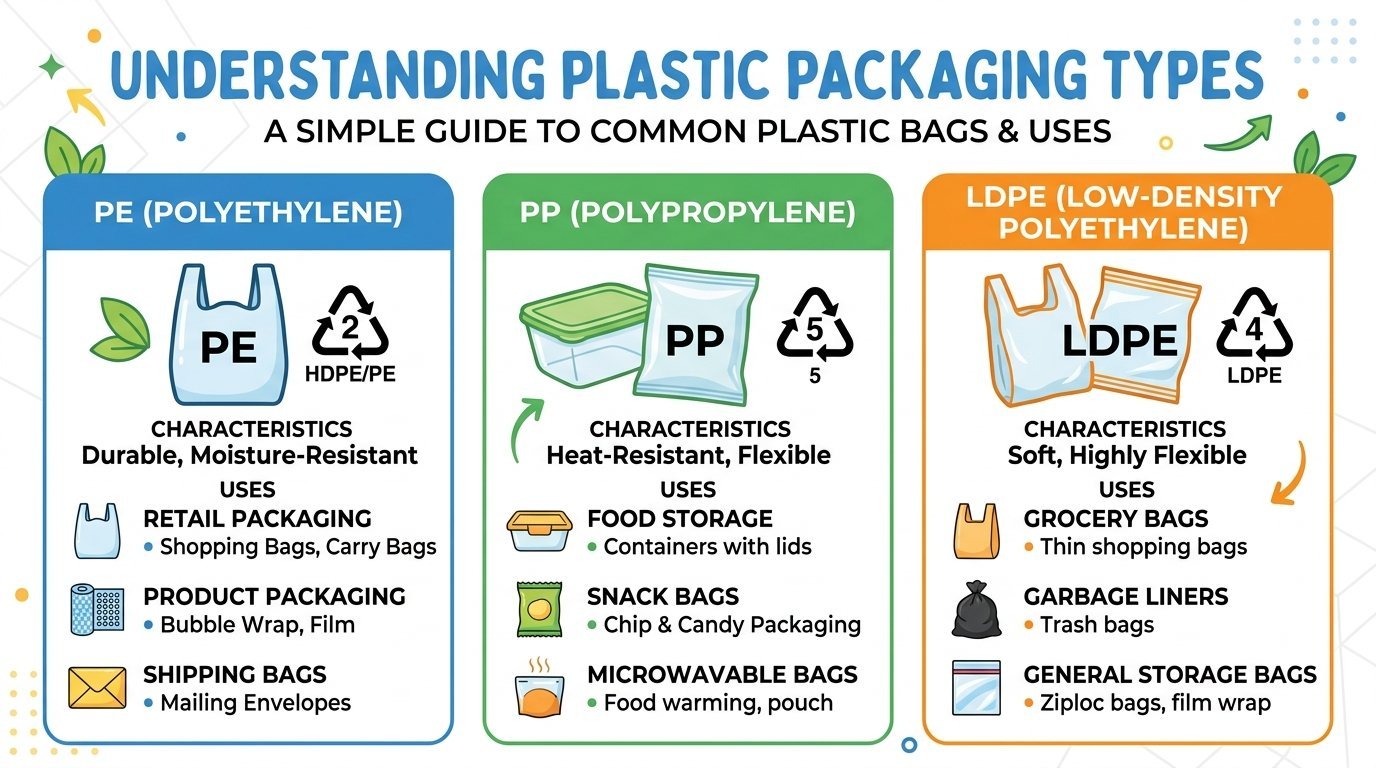
Advantages of Plastic Bags for Everyday Storage
Plastic bags are cheap, lightweight, and non-specific. They offer an easy way of keeping the non-perishable goods in the homes, offices, and the retail place.
Industries Using Plastic Packaging
Plastic bags are extensively used in:
- Retail Packaging: To transport goods and small stuff.
- Food Packaging: Bulk food grains, fruits, and vegetables.
- Waste Management: To dispose of trash and conduct some general storage.
Mylar Bags vs Plastic Bags for Food Storage
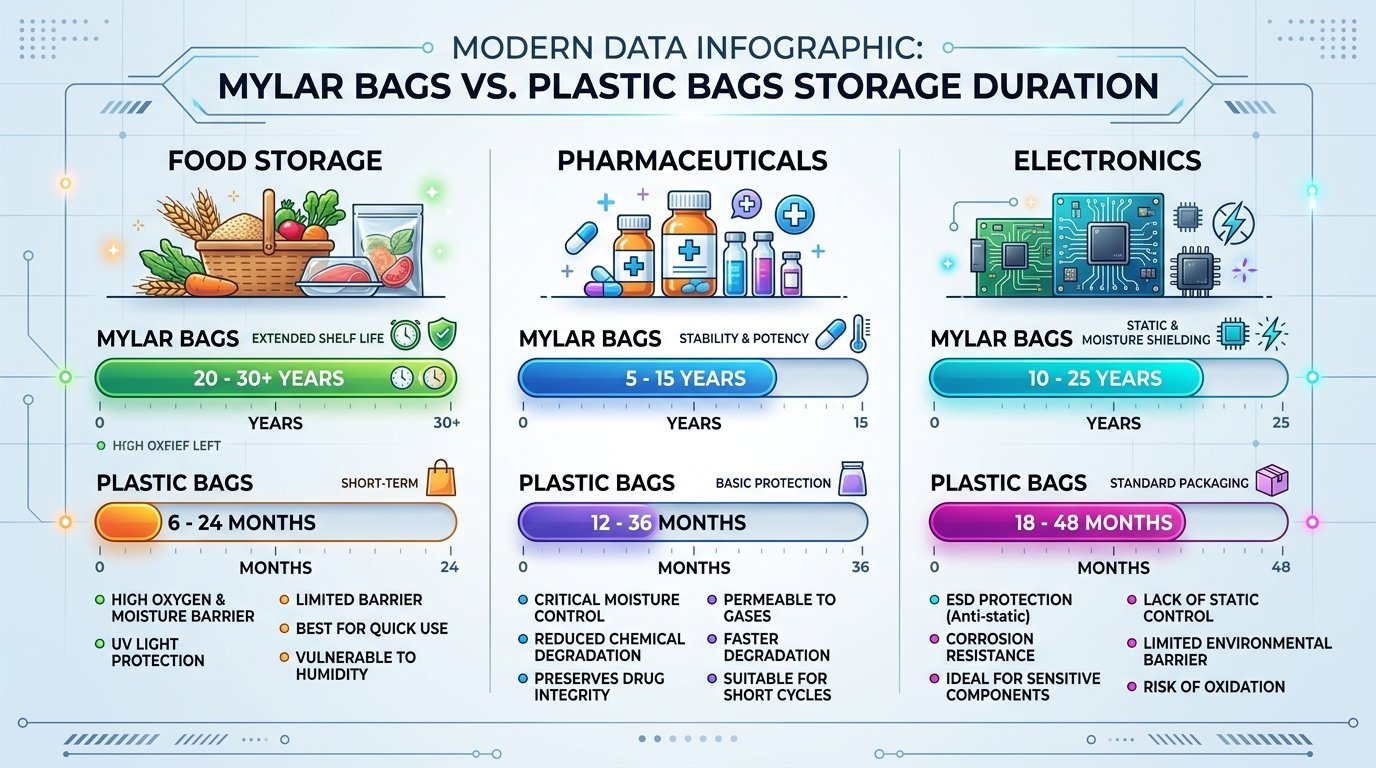
| Storage Duration | Mylar Bags | Plastic Bags |
| Food Products | 1-5 years | 1-6 months |
| Pharmaceuticals | 3-5 years | 6-12 months |
| Electronics | 3-10 years | 1-3 years |
Shelf Life Comparison
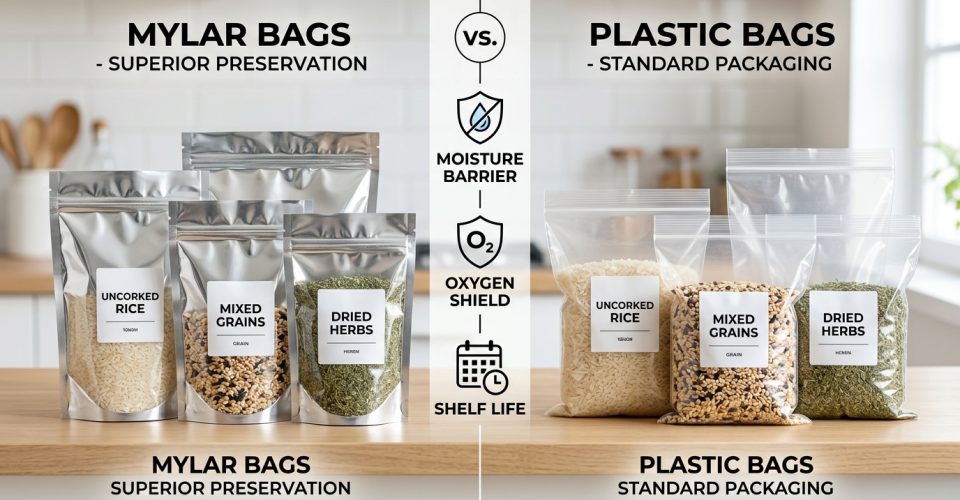
Mylar bags are also known to increase the shelf life of the food to a great extent, by keeping the food dry, by moisture lock and heat resistance. Plastic bags are less effective in comparison, as they offer a lesser degree of protection and their ability to extend the shelf life of food is potentially not effective.
Protection Against Moisture and Oxygen
Mylar bags are very efficient in preventing oxygen and moisture both, which may cause spoilage. Conversely, plastic bags provide little protection against oxygen and moisture unless they are further sealed by means of methods such as vacuum sealed.
Compatibility with Oxygen Absorbers
Oxygen absorbers can be used to seal mylar bags to allow an airtight preservation of the food items and extend their shelf life even more. Unless further actions are undertaken, plastic bags will not offer this extent of protection.
Moisture Barrier Packaging: Mylar vs Plastic Bags
How Mylar Provides Moisture Resistance
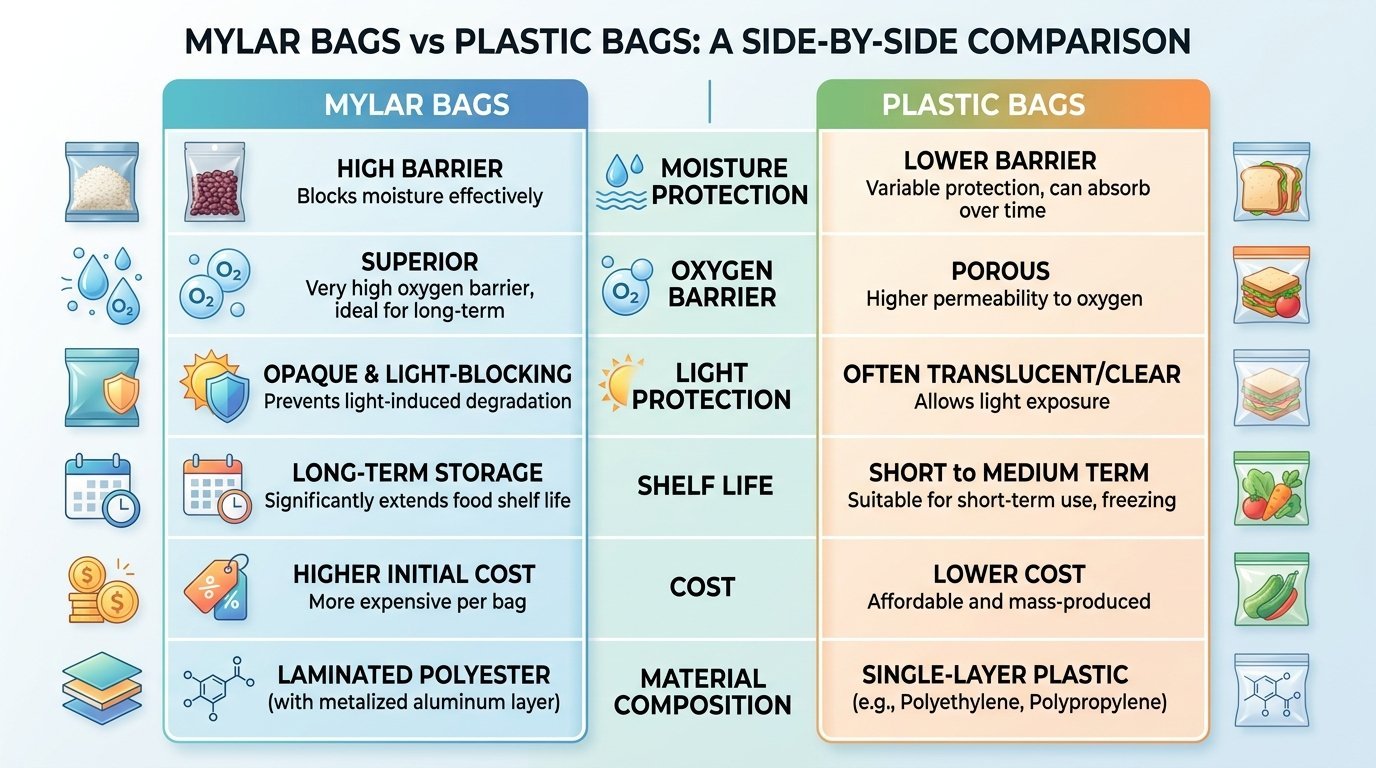
Mylar bags have a high moisture barrier due to the aluminum foil used as the lining. They are the best bag to store items that require to be kept dry hence can be used in storing grains, dried foods and even medical supplies.
Limitations of Standard Plastic Packaging
Although plastic bags may be sealed with heat, they are not effective as Mylar bags at inhibiting the absorption of moisture. With time, plastic bags can be penetrated resulting in food spoilage or degradation of products.
Best Packaging for Humidity Protection
Products that are very sensitive to humidity, Mylar bags are more preferable since they provide greater protection than normal plastic bags do.
Airtight Packaging Bags Comparison
Heat Sealable Mylar Bags
Mylar bags can be heat sealed to make a non-breathable environment and it is not exposed to air, moisture, and light. The attribute comes in handy especially in long term food storage and the preservation of sensitive products.
Resealable Plastic Storage Bags
Storage bags of plastic material can be resealed, and this can offer temporary security. Nonetheless, they do not provide the same sort of airtight protection as Mylar bags do, and therefore are not as reliable when it comes to long-term preservation.
Which Packaging Offers Better Air Protection?
Mylar bags are better in terms of offering airtight security which maintains the contents over a long period of time. Plastic bags are not so strong in this aspect of air-tightness.
Mylar vs Plastic Storage Bags for Long-Term Preservation
Packaging for Dry Food and Sensitive Products
Mylar bags are perfect when handling dry foods such as rice, beans, and powdered foods because they ensure long storage against factors that lead to spoilage. Compared to that, plastic bags could only be appropriate for short-term storage.
Smell Proof and Light Barrier Protection
Mylar bags are also very effective in protecting light and odors hence they are perfect to store food and products that are sensitive to UV rays. Plastic bags are however not as light-blocking or smell-proof.
Storage Duration Comparison
Mylar bags offer a much longer time of storage compared to the plastic bags, which may start to degrade or allow the outside factors to enter them after some time.
Cost Comparison of Mylar Bags vs Plastic Bags
| Packaging Type | Unit Cost (per 1000 bags) | Long-Term Value | Customization |
| Mylar Bags | $300 | High (Long-term storage) | Fully customizable |
| Plastic Bags | $50 | Moderate (Short-term storage) | Minimal customization |
Wholesale Packaging Cost Differences
Plastic bags cost less on a unit price, but Mylar bags cost more to invest in. But in the case of long term preservation, the value of Mylar bags is much better as it minimizes the food spoilage and wastage.
Value for Long-Term Storage Investment
Mylar bags are more advantageous to a business or individual that is interested in long-term storage. They assist in maintaining product integrity and minimizing wastage thus a more economical option in the long run.
Packaging Cost vs Product Protection
Mylar bags may be expensive initially, but their capacity to guard the products against water, oxygen, and light justifies their price when business people aim at product quality and longevity. If you want to know more about calculating packaging cost, details are here in this post. How Much Does Packaging Cost?
Sustainability and Environmental Impact
Recyclability of Plastic Packaging
Plastic bags are the most common and they are not as environmentally friendly as they are not bio-degradable. There are numerous forms of plastic wrappings that cannot be recycled and add to plastic pollution.
Sustainability Challenges of Mylar Bags
Yes, Mylar bags are reusable. They are a combination of polyester and aluminum, although they offer a high level of protection, which is not as eco-friendlier as other types of materials such as paper or bioplastics.
Eco-Friendly Packaging Alternatives
Companies seeking a more sustainable approach would have to think about eco-friendly packaging solutions that are more protective and less harmful to the environment which include recycled Mylar, biodegradable plastic or recycled Mylar alternatives.
Which Packaging Is Best for Different Industries?
Food Packaging Solutions
The most appropriate method of food storage technique is the mylar bags, particularly those which need long-term preservation. Short-term storage can be conducted with the use of plastic bags but they might not be as effective in the long run.
Pharmaceutical and Chemical Storage
Mylar packaging has better ability to protect against moisture, oxygen and light than plastic bags in case of the pharmaceuticals and chemicals that are sensitive to the environmental conditions.In today’s era, you can choose mylar bags as pharmaceutical packaging.
Retail and Commercial Packaging
Plastic bags are more so utilized in the retail environment as they are cost effective and easy to use by the common consumers. Mylar bags on the other hand are distributed with high end products that do have a longer shelf life. So yes, mylar bags refer to retail packaging.
Industrial Storage Packaging Needs
Mylar bags are also popular with industrial storage of food products such as seeds and grains, as well as chemicals, where long-term preservation is a major concern.
Summary:
| Feature | Mylar Bags | Plastic Bags |
| Material | Polyester + Aluminum (Multi-layer) | Polyethylene, Polypropylene |
| Moisture Protection | Excellent (Barrier to moisture) | Limited (May absorb moisture) |
| Oxygen Barrier | Strong (Prevents oxidation) | Poor (Oxygen can permeate) |
| Light Protection | Excellent (Prevents UV degradation) | Poor (Light can penetrate) |
| Shelf Life | Long-term (up to several years) | Short-term (weeks to months) |
| Cost | Higher upfront cost | Low upfront cost |
| Environmental Impact | Not recyclable (challenges with disposal) | Recyclable (but contributes to plastic pollution) |
| Common Uses | Long-term food storage, pharmaceuticals, electronics | Retail packaging, bulk food storage |
| Heat Sealing | Can be heat-sealed for airtight packaging | Can be heat-sealed or resealed |
| Customization | Fully customizable with logos, shapes, and sizes | Limited customization |
FAQs
What is the difference between Mylar bags and plastic bags?
Mylar bags are produced using polyester and aluminum which is a better shield against moisture, oxygen, and light among others. Plastic bags are generally produced out of polyethylene or polypropylene and do not offer a very good protection of long-term storage.
Are Mylar bags safe for food storage?
Mylar bags can also be used to store food. They are mostly applied in the conservation of foodstuffs because they avoid the entry of moisture and oxygen into the food.
Do Mylar bags protect against moisture and oxygen?
Yes, Mylar bags are a great shield against moisture and oxygen and hence they are optimal in terms of long-term storage of food and preservation of product.
Which bags are better for long-term food storage?
The long-term food storage should be in Mylar bags because they have airtight seals as well as protecting against moisture, oxygen and light.
Are plastic bags environmentally friendly?
Plastic bags cannot be regarded as environmentally friendly since it is not biodegradable, and it can cause plastic pollution. Nevertheless, they continue to be popular in the short term storage.
Can Mylar bags increase product shelf life?
Yes, Mylar bags are very useful because they can have a long duration of shelf life of products since they create a moisture free airtight environment that will ensure that the products are preserved much longer.